The Art of Visible Mending: Turning Clothing Repairs into Wearable Design

Description
Clothing does not always need to look brand new to remain beautiful. A faded denim jacket, a shirt with a small tear, or a pair of jeans with worn-out knees can still have plenty of life left in them. With creative sewing, embroidery, and decorative details, these imperfections can become interesting features rather than reasons to discard a garment. For makers exploring new ways to refresh their wardrobes, Iron On Patches UK offers inspiration for incorporating embroidered designs into clothing customization. This approach is known as visible mending, a creative sewing practice that makes clothing repairs part of the design rather than something to hide.
Instead of trying to make every repair invisible, visible mending celebrates contrast, texture, colour, and individual expression. It encourages sewing enthusiasts to look at damaged clothing differently and explore how practical repairs can become opportunities for artistic experimentation.
Understanding the Creative Philosophy Behind Visible Mending
Traditional clothing repairs generally aim to restore a garment to its original appearance. Stitches are hidden, replacement fabric is carefully matched, and imperfections are concealed wherever possible.
Visible mending takes another direction. It treats repairs as decorative elements that contribute to the character of a garment. A patch does not have to disappear into the fabric, and embroidery does not need to match the original stitching. Instead, contrasting colours, unusual patterns, and decorative techniques can make the repaired area stand out.
This approach also encourages people to develop a more personal relationship with their clothing. A repaired jacket may carry memories of different creative projects, while an embroidered patch can represent an interest, experience, or meaningful design.
For sewing enthusiasts, visible mending offers an opportunity to combine practical skills with artistic freedom.
Why Imperfections Can Become Part of a Garment’s Identity
Everyday clothing experiences regular friction, washing, stretching, and exposure to different environments. Over time, these conditions can weaken certain areas of a garment.
Denim often develops worn patches around the knees and pockets. Jackets may experience damage near the elbows and cuffs, while shirts can develop small holes or loose seams.
Rather than treating these problems as reasons to discard clothing, makers can use them as starting points for creative improvements.
Consider an old denim jacket with a faded section on the back. A carefully placed embroidered design can give that area a completely different appearance. Similarly, a small hole near the knee of a pair of jeans can become the centre of a decorative fabric composition.
The important idea is to work with the garment’s existing character instead of attempting to erase every sign of wear.
Choosing the Right Materials for Decorative Repairs
The success of visible mending depends partly on selecting materials that complement the original garment.
Different fabrics respond differently to stitching, heat, adhesives, and repeated washing. Understanding these differences helps prevent repairs from becoming uncomfortable or damaging the surrounding material.
Denim and Heavy Cotton
Denim is particularly suitable for decorative repairs because its relatively sturdy construction can support additional stitching and fabric layers. Cotton jackets, workwear, and casual trousers also provide opportunities for embroidery, applique, and patchwork.
For heavier fabrics, makers can experiment with contrasting thread colours, geometric patterns, and embroidered motifs.
Lightweight Cotton and Linen
Lightweight materials require a gentler approach. Thick patches and dense stitching can create unnecessary weight or cause the fabric to gather.
Smaller decorative elements, lightweight backing materials, and careful stitch placement can produce a more balanced result.
Stretch Fabrics
Stretch garments need special attention because decorative additions may restrict movement. Before attaching any patch, consider how the fabric stretches and whether the repair method will remain flexible enough for comfortable wear.
Choosing compatible materials is just as important as selecting an attractive design.
Decorative Patches: Where Practical Repair Meets Personal Expression
One of the most interesting aspects of visible mending is the opportunity to introduce decorative patches into ordinary clothing.
A patch can reinforce a weakened area, cover an existing imperfection, or simply add a visual feature to a garment. Its shape, colour, texture, and placement all influence the final appearance.
For example, a circular embroidered patch can create a focal point on a denim jacket, while several smaller designs can form a coordinated pattern across a pair of jeans.
Custom designs also give makers more control over the appearance of their projects. Businesses, independent designers, and individual sewing enthusiasts can explore Iron On Patches UK when looking for embroidered designs that complement clothing customization and creative garment projects.
The key is to consider the patch as part of the overall garment composition rather than an accessory added at the last moment.
Not every decorative patch is suitable for every repair. Its backing, dimensions, and attachment method should match the fabric and the intended use of the clothing. Areas exposed to frequent movement or friction may benefit from additional stitching, even when a heat-activated backing is used.
Turning Ordinary Repairs into Creative Sewing Projects
Visible mending does not require advanced embroidery skills or expensive equipment. Many interesting projects can begin with simple sewing techniques and materials already available in a craft collection.
Here are several ways to experiment with decorative repairs.
- Create a Decorative Knee Repair
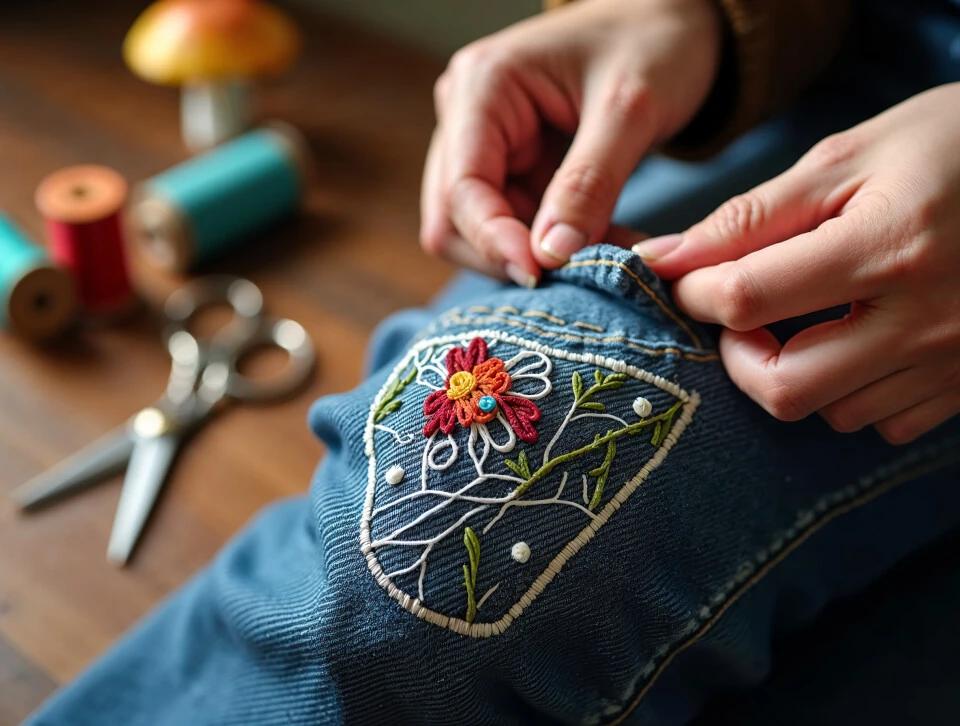
Jeans frequently develop holes around the knees because of repeated movement and friction. Instead of replacing the trousers, reinforce the damaged area with a fabric patch.
Choose a contrasting fabric to create a noticeable design, or use embroidery to add decorative details around the repaired section.
- Give an Old Jacket a New Identity
A faded jacket can become an interesting creative project through carefully planned decorative additions.
Embroidered motifs, small patches, and contrasting stitching can create a coordinated appearance. Consider the jacket’s original colour and fabric texture when deciding where to position each element.
- Experiment with Botanical Embroidery
Leaves, flowers, stems, and other natural shapes work particularly well in visible mending projects.
These designs can be stitched around small imperfections or incorporated into fabric patches. Their organic shapes also make it easier to experiment with different thread colours and stitch directions.
- Combine Different Textile Textures
Visible mending becomes more interesting when several materials are used together.
A denim surface, textured cotton patch, and decorative embroidery thread can create a layered appearance. However, materials should be compatible in weight and flexibility so that the repaired garment remains comfortable.
Making Repairs Last Beyond Their Appearance
A decorative repair should be attractive, but it also needs to perform its practical purpose.
Before beginning a project, examine the damaged area carefully. If the surrounding fabric is weak, attaching a decorative element directly over the damage may not provide enough reinforcement.
Start by trimming loose threads and stabilizing the weakened fabric. Select a suitable backing material where necessary, then secure the repair using an attachment method appropriate for the garment.
For iron-on designs, always check the manufacturer’s application instructions and the fabric’s heat tolerance. Some synthetic, delicate, or heat-sensitive materials may not be suitable for direct heat application.
After completing the repair, inspect the edges and stitching to make sure the decorative element is securely attached.
Washing instructions also matter. Turning garments inside out, using appropriate washing temperatures, and avoiding unnecessarily aggressive treatment can help preserve decorative work.
Visible Mending and the Future of More Thoughtful Clothing Habits
Visible mending connects creative sewing with a broader interest in making clothing last longer.
Fashion consumption often encourages people to replace garments when small imperfections appear. However, repairing and customizing existing clothing offers another possibility.
A well-planned repair can extend the useful life of a favourite jacket, preserve a meaningful piece of clothing, or transform an ordinary garment into something more personal.
It also creates opportunities to develop practical skills. Learning how fabrics behave, understanding different stitches, and experimenting with decorative techniques can make sewing more rewarding.
For younger makers and experienced sewing enthusiasts alike, visible mending demonstrates that creativity does not always begin with new materials. Sometimes, the most interesting project starts with something already sitting in the wardrobe.
Conclusion: Let Every Repair Tell a Story
Visible mending changes the way we think about damaged clothing. Instead of treating worn areas as imperfections that must always be hidden, it encourages makers to see them as opportunities for creative expression.
Through embroidery, decorative patches, contrasting fabrics, and thoughtful stitching, an ordinary repair can become a distinctive design feature. The result is clothing that reflects individual creativity while remaining useful and wearable.
Whether repairing an old denim jacket, refreshing a favourite pair of jeans, or adding personality to handmade garments, the most successful projects balance visual appeal with practical construction.
Ultimately, visible mending reminds us that clothing does not lose its value simply because it shows signs of use. With imagination and a few thoughtful sewing techniques, those signs of wear can become part of its story.
Frequently Asked Questions
What is visible mending in sewing?
Visible mending is a clothing repair technique in which stitches, patches, and decorative details are intentionally made visible. Rather than hiding damage, the repair becomes part of the garment’s overall design.
Which fabrics are best for visible mending?
Denim, cotton, canvas, and other relatively sturdy fabrics are popular choices. Lightweight and stretch fabrics can also be repaired, but they require compatible materials and techniques to maintain comfort and flexibility.
Can embroidered patches be used to repair damaged clothing?
Yes. Embroidered patches can cover small damaged areas and add decorative detail. However, significantly weakened fabric may need reinforcement underneath to ensure the repair remains secure.
Are iron-on patches suitable for every garment?
No. Iron-on patches require fabrics that can tolerate the recommended application temperature. Always check the garment’s care label and the patch manufacturer’s instructions before applying heat.
How can I make decorative clothing repairs last longer?
Use compatible fabrics and thread, reinforce weak areas, secure patch edges properly, and follow suitable washing instructions. Additional stitching can also improve attachment in areas exposed to regular movement.