From Piecing to Perfection: A Longarmer’s Perspective

Hello, WeAllSew readers! BERNINA Ambassadors, Jen and Jaclyn here again to discuss how longarmers and quilters can collaborate. If you missed Part One, we definitely recommend checking out that part where Jaclyn shares some thoughts around questions for the quilter. In today’s blog, we’ll discuss questions for the Longarmer.
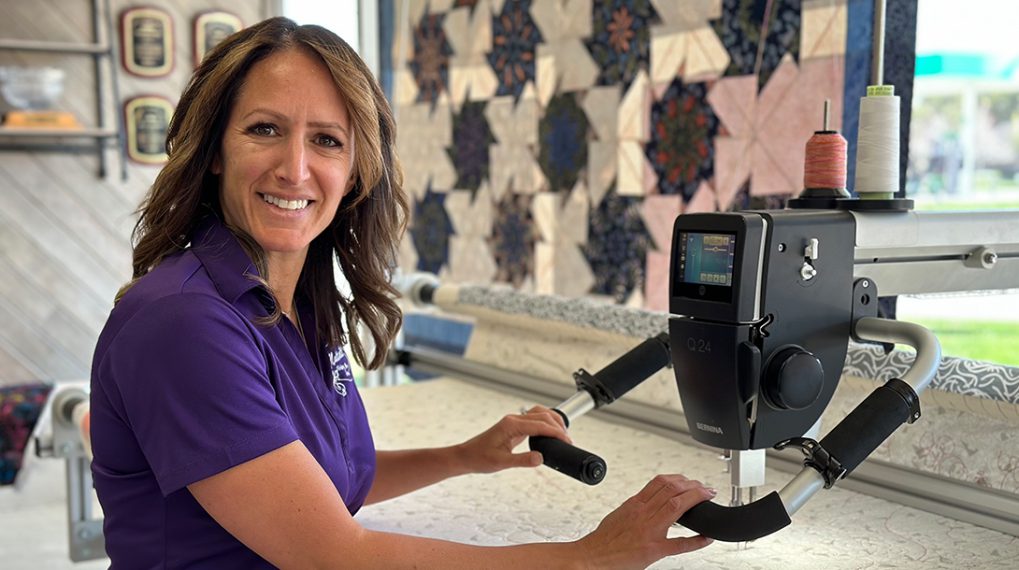
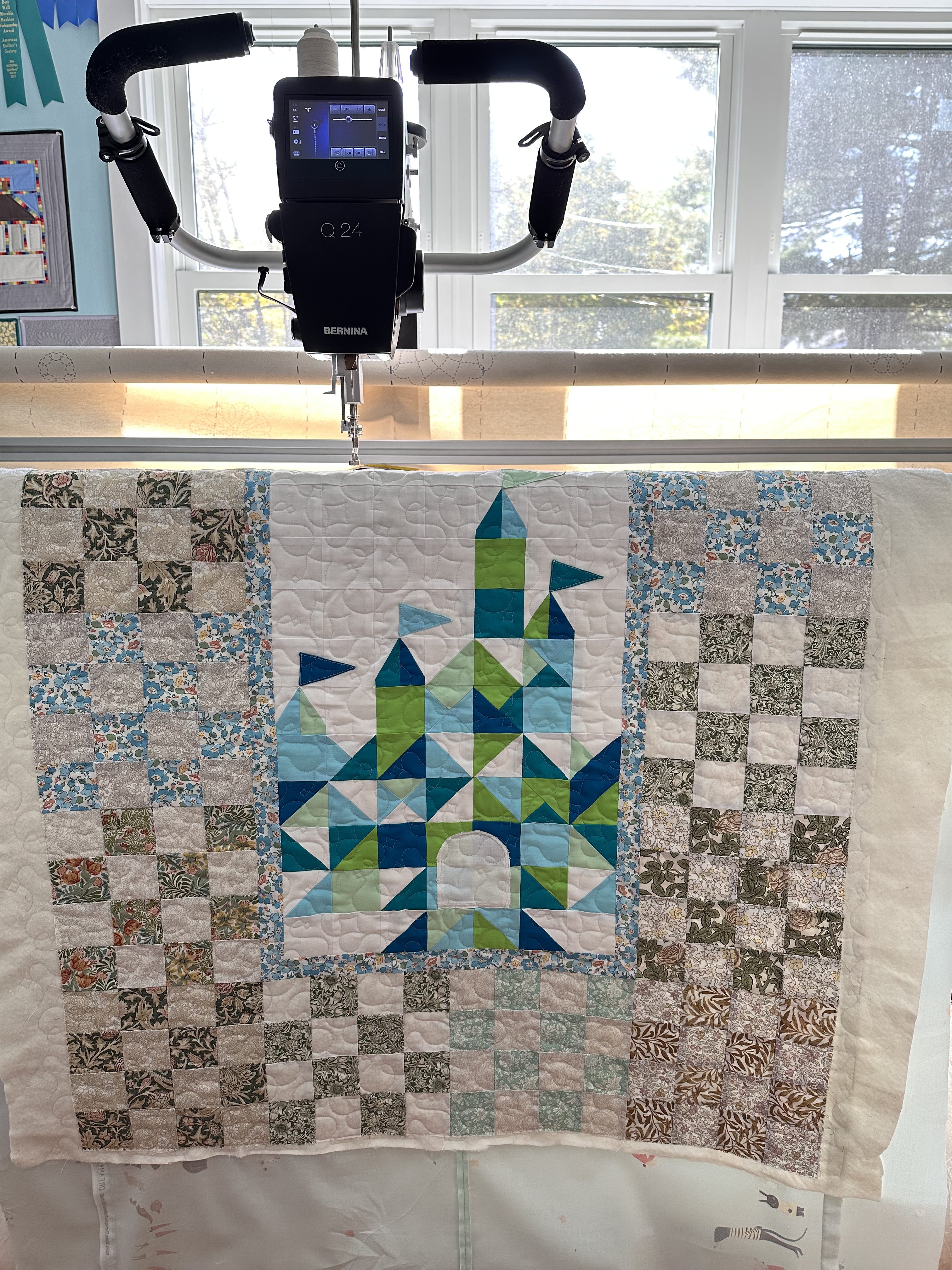
These are questions that Jaclyn asked me as a longarmer and BERNINA Q 24 Ambassador, and my responses to her. Every longarmer might do things a bit differently, but hopefully this will give all the quilters some ideas of questions to ask their longarmer and perhaps give some longarmers some ideas around what kind of information they should be providing to their quilters.
Part Two, Questions for the Longarmer
Q: What is included in the price?
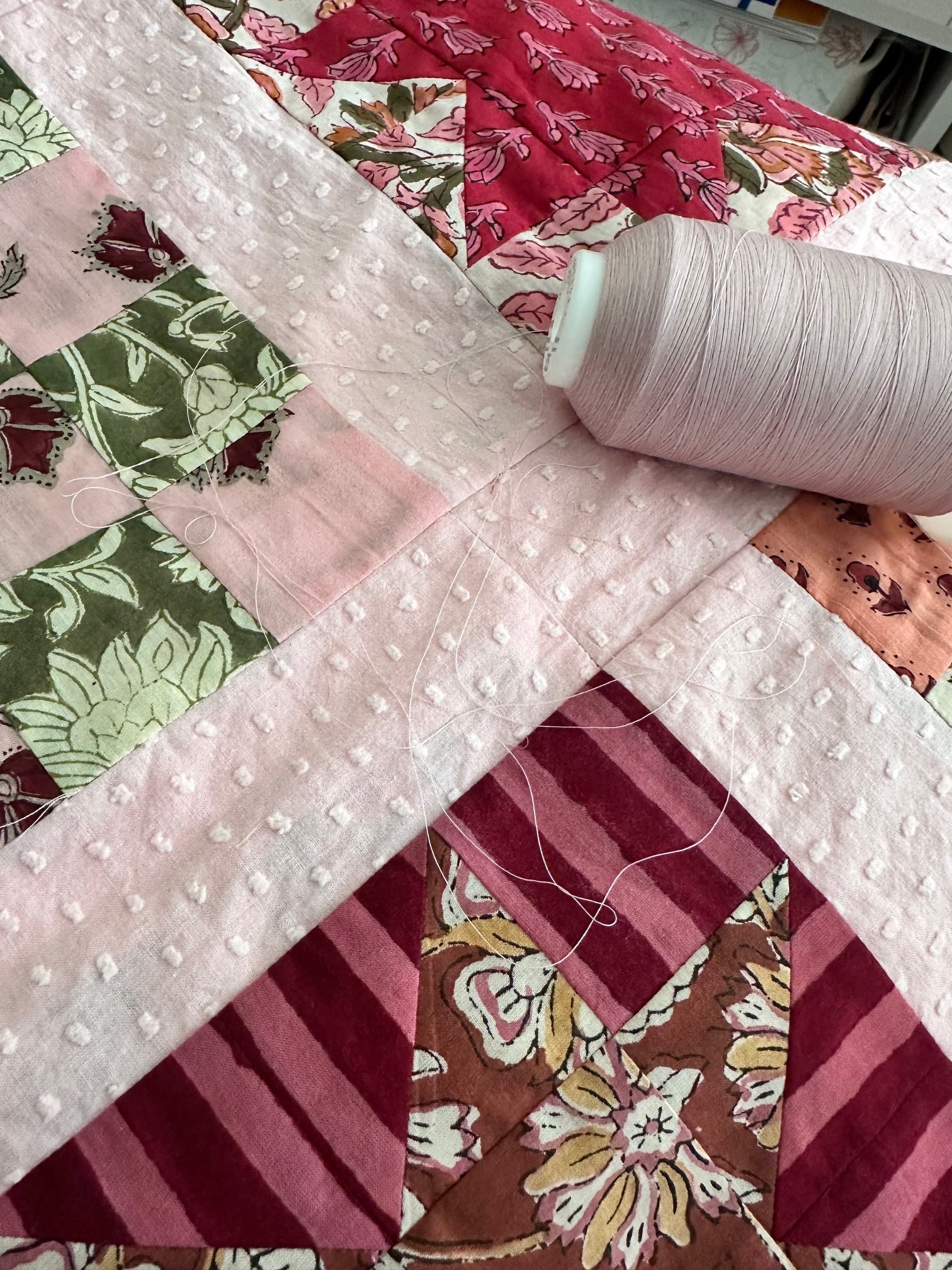
Jen: Every longarmer is different, but it’s helpful to know what they include in their pricing model. Most pantograph options charge by the square inch, and custom longarm quilting can be charged by the square inch or by the hour. (To calculate your square inch, multiply the height by the width of the quilt.) Typically, thread is included in the price because a longarmer might have a preference of thread that works best with their machine. But please vocalize your preferences to the longarmer here if you have them. Do you really want a cotton or polyester thread? Do you want a thinner 50wt or slightly more noticeable 40wt? And will those threads work for the longarmer? Before I had my longarm, I sometimes sent the exact thread I wanted with the quilt after consulting with my longarmer to see if the thread worked for them.
Many longarmers will charge additional fees for things such as: providing batting, adding the binding, piecing the backing, pressing the quilt and backing, etc. Always ask for clarification.
Q: Let’s talk about thread! Thread has been mentioned a few times in our conversations. I know that I can select colors, but what else should I know about thread? I’ve never been offered options outside of color variation. Are there ever situations where I might want to provide my own thread, and would a longarmer be okay with that? Tell me everything!
Jen: Color is probably the primary thing to consider when chatting with your longarmer, but there’s also the thread thickness or weight. My go-to is usually a 50wt or a 40wt polyester thread, but I’ve quilted with 100% cotton and metallic threads on the longarm. Metallic thread can take more experience and might require more experience and a higher fee.
As a longarmer, I like having open communication with the quilt top maker. In quilting Jaclyn’s quilts, I texted her photos of the quilts with different thread options to get alignment before beginning the quilting. This was after an initial video conference where we discussed pantograph designs and thread colors. I want my clients to be happy, and frequent communication helps with that.
Q: What are my options for quilting a quilt? What is edge-to-edge quilting vs free-motion? Are there benefits of one over the other? Is one more expensive?
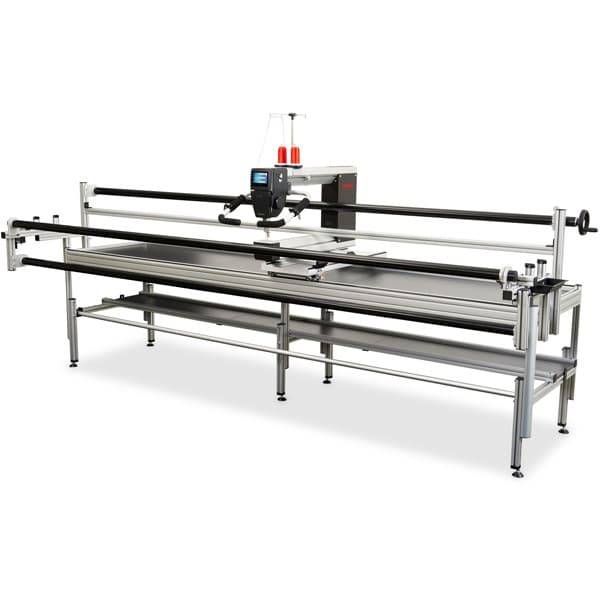
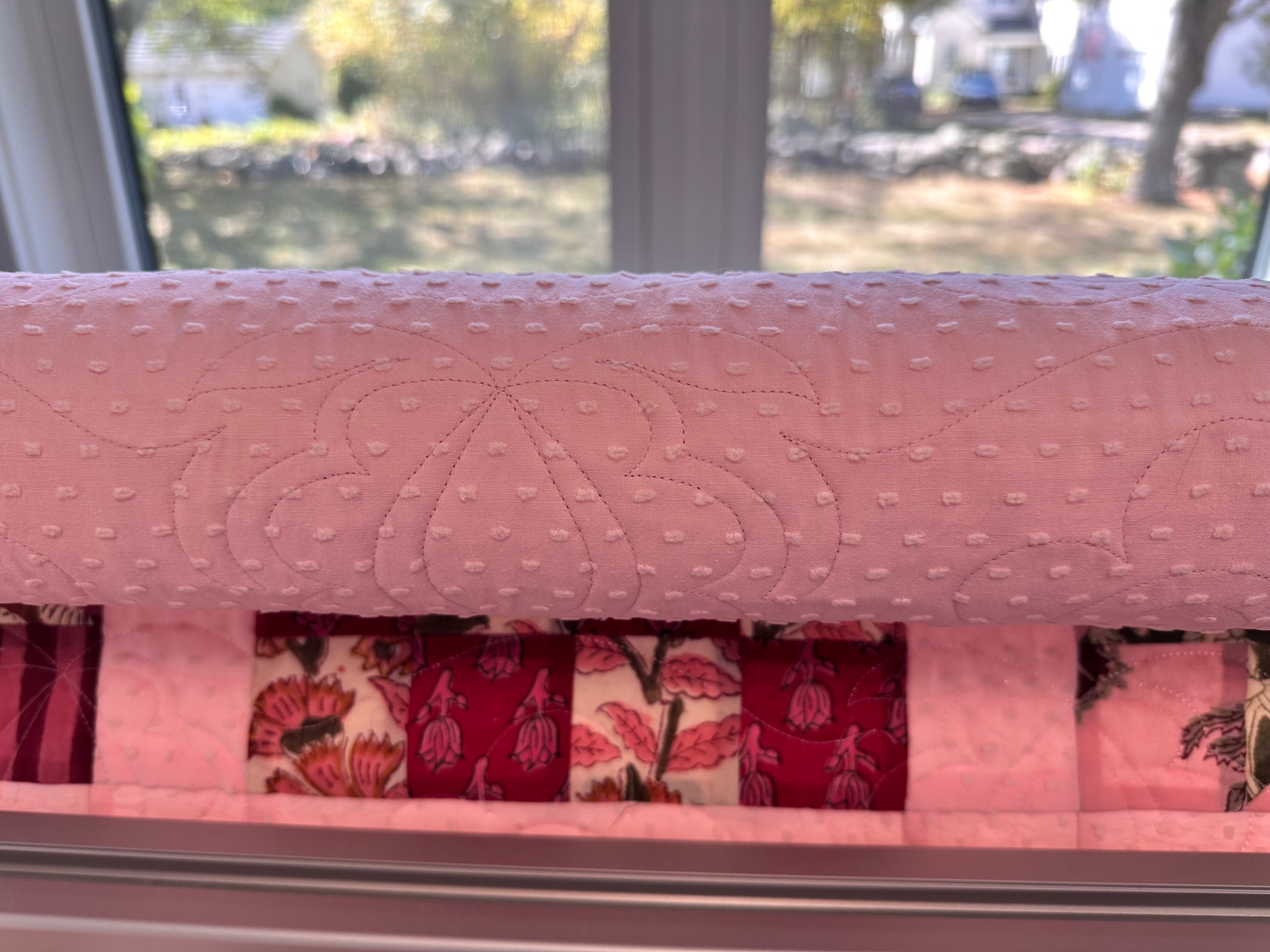
Jen: Edge-to-edge quilting is when a longarm quilter uses a pantograph to quilt and all over design on the quilt. A longarmer needs to have computerized software or an option to use a printed, paper pantograph with a laser to execute these designs. I use the BERNINA Q-matic to digitally quilt pantographs with my BERNINA Q 24.
Free-motion quilting is when a quilter does everything manually. This could be as simple as some stippling or straight line quilting (which isn’t always as easy as people think), or as detailed as a quilter can get. Free-motion quilting costs more because it requires much more labor and experience. With a pantograph using software like the Q-matic, a longarmer can keep an eye on the quilt while doing other things, while free motion quilting requires 100% of the longarmer’s attention and time.
There are pros and cons to both options. Heirloom quilts might require more attention and custom quilting, while baby quilts might be best using a pantograph. Talk to your longarmer and discuss what’s best for your quilt.
Q: Where can I find pantograph options available for me to choose for my quilt? Do you have ones for me to choose from? What if I want to use a design that you don’t have?
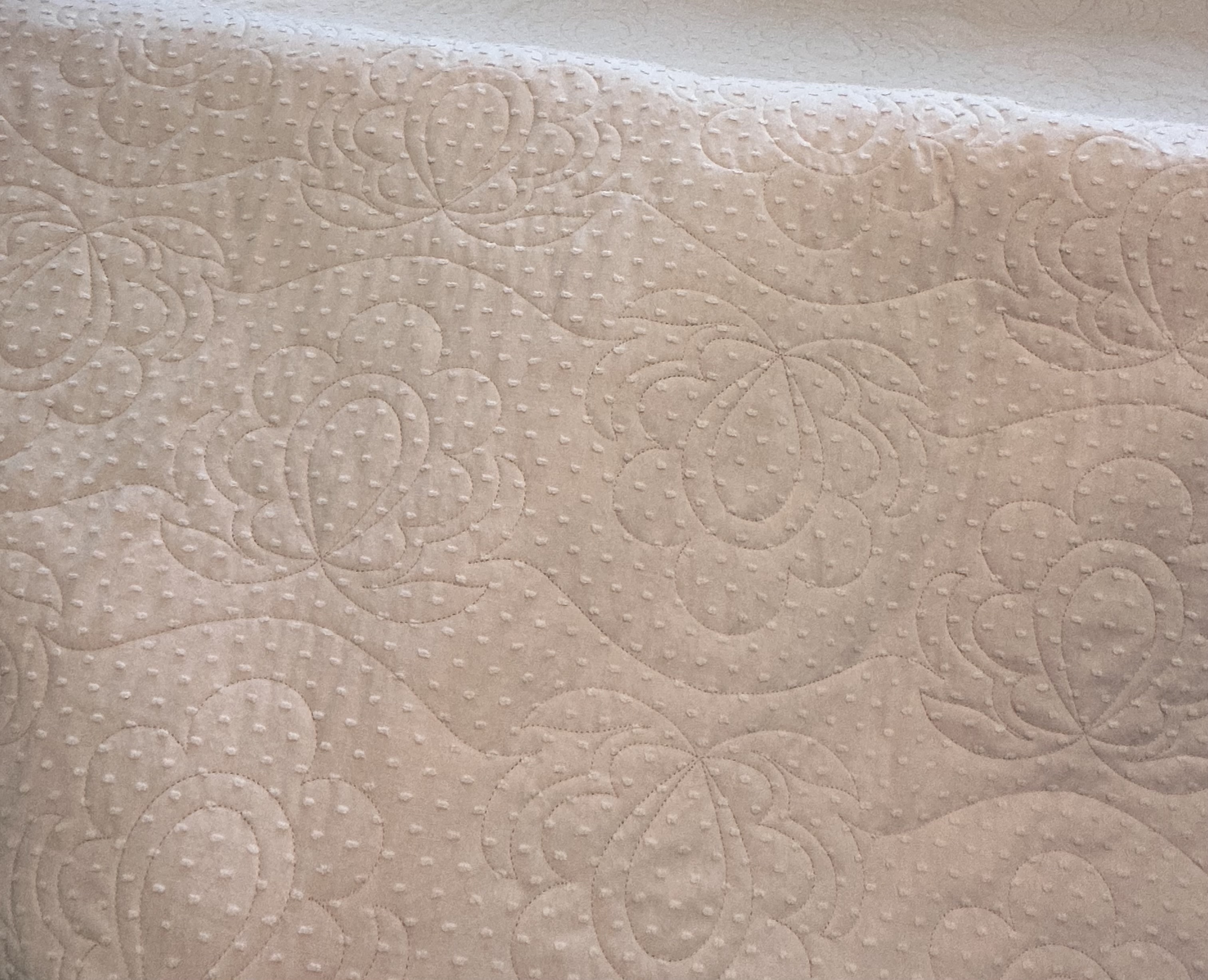
Jen: Many longarmers will share a photo list of available pantograph options that they already have available in their repertoire. As a BERNINA Ambassador, I work with OESD Quilting and leverage many of their quilting designs. But there are countless options out there for pantographs. For me, if there’s a design that a quilter wants that’s not in my library, I will generally procure that pantograph. Others might choose to split the cost of the pantograph with the quilter or make the quilter pay for the pantograph. But in general, pantograph designs are approximately the cost of a yard or two of fabric and worth the investment in my opinion.
Q: Can you scale the size of a pantograph? Are there things I should know about a smaller vs larger scale of a panto?
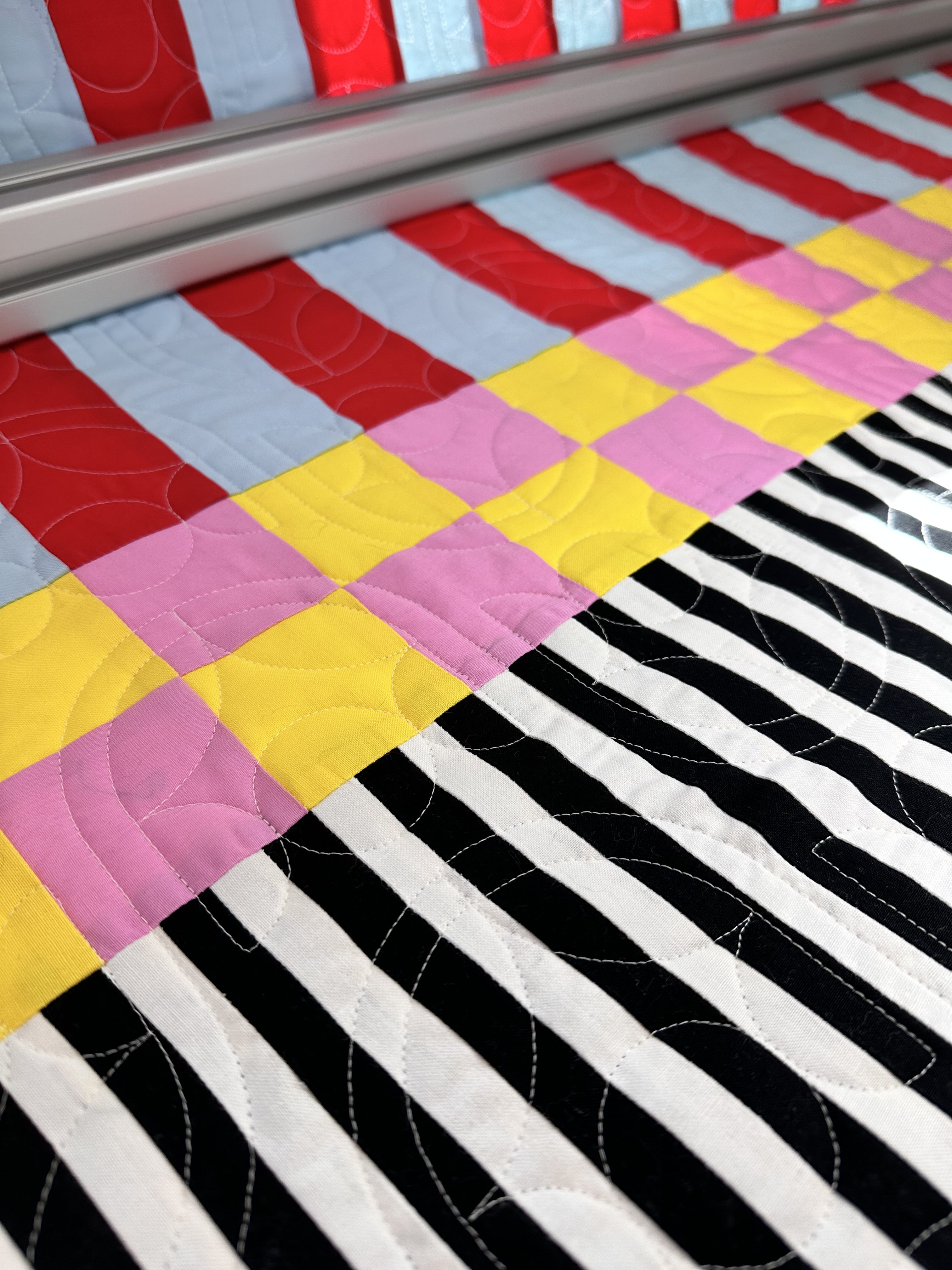
Jen: Absolutely! Generally, I will scale the design to what I think is appropriate for the quilt. But if you have a specific preference, please vocalize that. There are many digitized block designs for example that can be used in various blocks, and as longarmers, we can scale that design to fit almost any block size (pending the throat length of the sewing machine). I’ll scale down a pantograph to be very small and tight if I’m quilting something for a bag, and I’ll scale up a pantograph to be larger and create a softer quilt, for say a baby quilt or bed quilt.
Jaclyn: The scale of a panto is generally one of those things that I care more about from a design standpoint than a functional one. When thinking about the scale of the panto, I try to imagine how that will play with the design of the quilt. The smaller/denser the quilting is, oftentimes the busier it can look on the final quilt. This can be great when I want to bring texture to a project—it depends on what I’m going for and how the quilting can best enhance the final project.
Q: What is the turnaround time for my quilt?
Jen: This really varies by quilter and time of year. Because I have another full-time job, I don’t take on a massive number of quilts for clients, and I try to keep my turnaround tight while setting expectations around work/personal travel and other commitments. Others might have a standard turnaround like 4-6 weeks, for example. Often, turnaround times are longer leading up to the Christmas holiday or summer wedding season, so plan accordingly when trying to make quilts for those seasons.
Jaclyn: I find that many longarmers will state (and frequently update) what their current turnaround times are on their websites and social media. If you’re on a deadline, it is definitely worth asking to be sure. Some longarmers will also offer rush quilting for an added fee.
Q: Are there quilts that are trickier or easier to longarm than others?
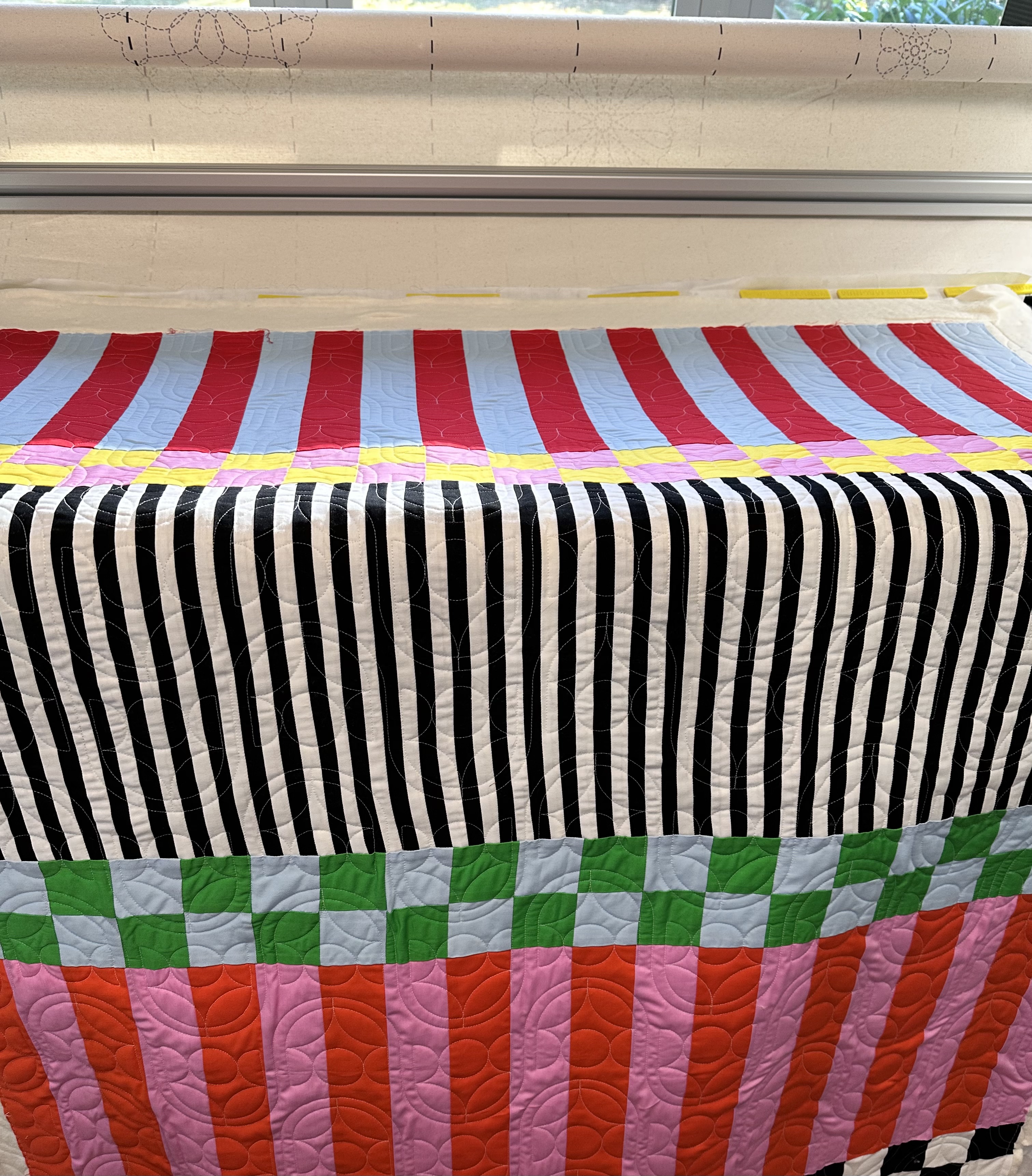
Jen: This answer will really vary by longarmer. To me, the most difficult quilts to quilt are ones that are a bit wonky or not flat. They require a lot more care and attention to make sure I deliver a product that I’m satisfied with delivering. Otherwise, I’m used to many different fabric types because I, myself, quilt with denim, linen, silk, cotton, and other fabrics. But others might feel different. I’ve had quilters refuse to quilt linen in the past before I had my longarm because they weren’t comfortable quilting that type of fabric. But as with many of these questions, just ask your longarmer.
Jaclyn: As a sewist who pieces quilt tops but does not longarm, I have so much respect and admiration for that stance—for artisans to only take on quilts that they feel confident longarming. I haven’t run into a situation like that myself, but I think it demonstrates a high level of professionalism and care for others’ work.
Q: Do I need to provide my own batting? What are the differences between various kinds of battings? How does fiber content affect the batting’s drape and durability? Any other factors that we should know?
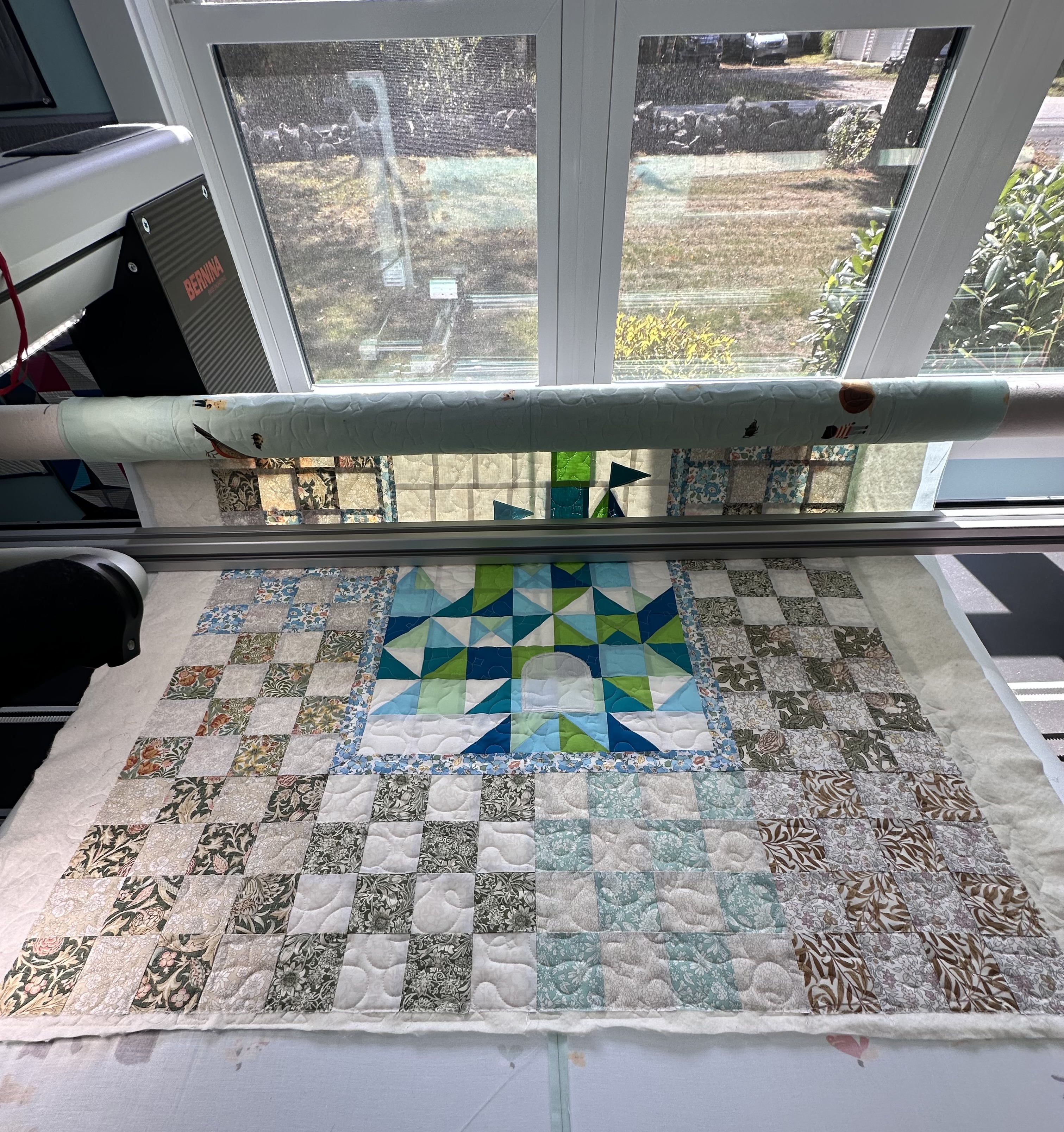
Jen: This will vary by longarmer. For me, I keep cotton and bamboo batting on hand by the bolt because they are my preferred batting types, and I will offer those at a cost. For me, I’m happy if others provide their own batting, as long as it’s about 3-4” longer on every side of the quilt to allow for some flexibility.
Different fiber content and thicknesses of that batting can affect the drape and durability. I have been using bamboo batting, for example, for my show quilts because I find it has a nice, soft drape and doesn’t hold creases as much when shipping quilts. Batting produced today has a fairly solid durability and is less of a concern, but certain types require a denser quilting to keep it stable. Check the label to see what kind of quilting density is required at a minimum.
Q: What are the best practices for supplying backing fabrics for a quilt?
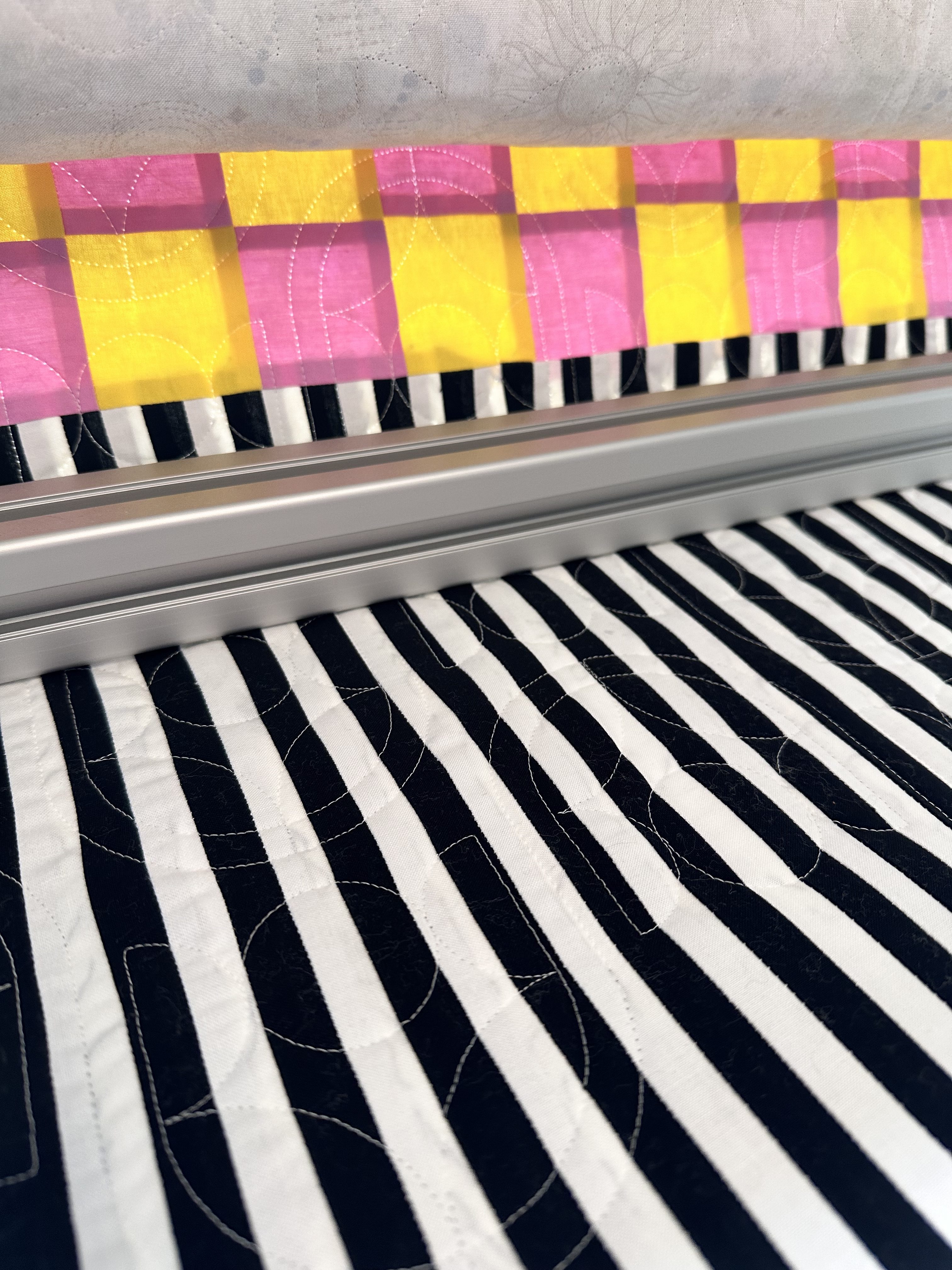
Jen: Backings need to be at least 4-6” wider and longer on each side of the quilt. Why? Because we need extra space to load the quilt on the top and bottom of the longarm frame and we need space on the sides of the quilt to attach side clamps to help stabilize the quilt while quilting. This extra space prevents the machine from bumping into the top and bottom of the frame and the clamps. It also allows us to quilt off of the quilt top slightly to make sure the quilt is fully quilted.
Longarmers and quilters – what other questions or details have been helpful in collaborating? Let us know in the comments below!