Why Embroidery Forces You to Think Differently

The first time I stopped an embroidery design mid-stitch, it wasn’t subtle.
I was more than halfway through a dense design when I realized there was a real chance I had ruined it. Not just the design. The shirt. Sacrificed to a slow sewing death.
The stitches were forming exactly as they should, but the fabric was telling a different story. It was pulling. Not dramatically, but enough that I knew if I let it keep going, I wasn’t going to like the outcome.
This wasn’t something I could fix later. There was no seam ripper solution waiting for me on the other side.
In sewing, you can adjust as you go. You can correct course before anything becomes permanent.
Embroidery doesn’t give you that option.
So much for my “set it and forget it” plan when it comes to machine embroidery.
What I Missed
The issue came down to stabilizer.
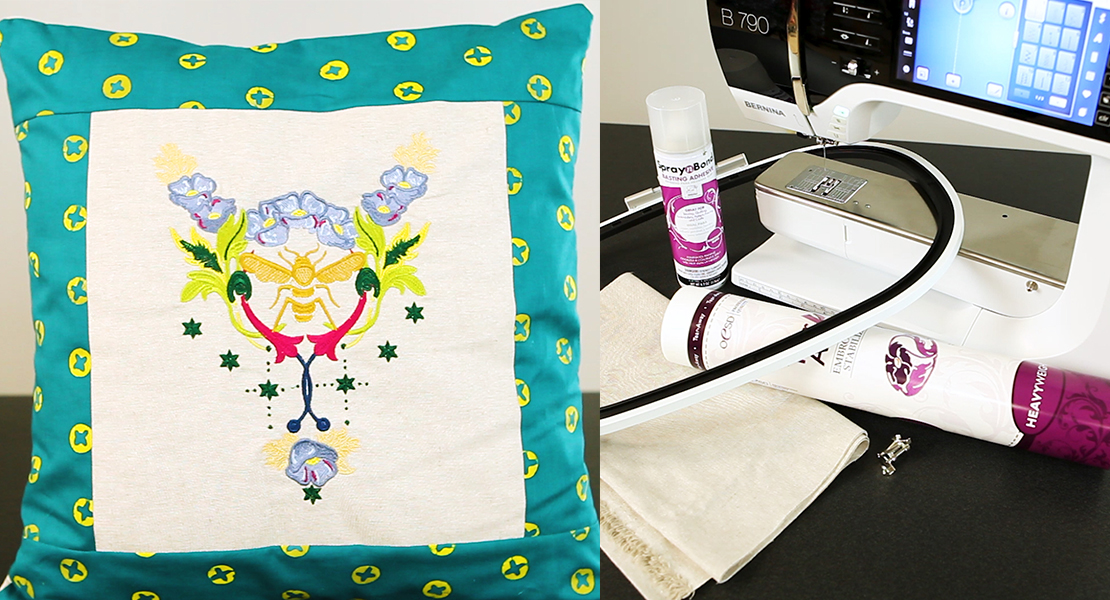
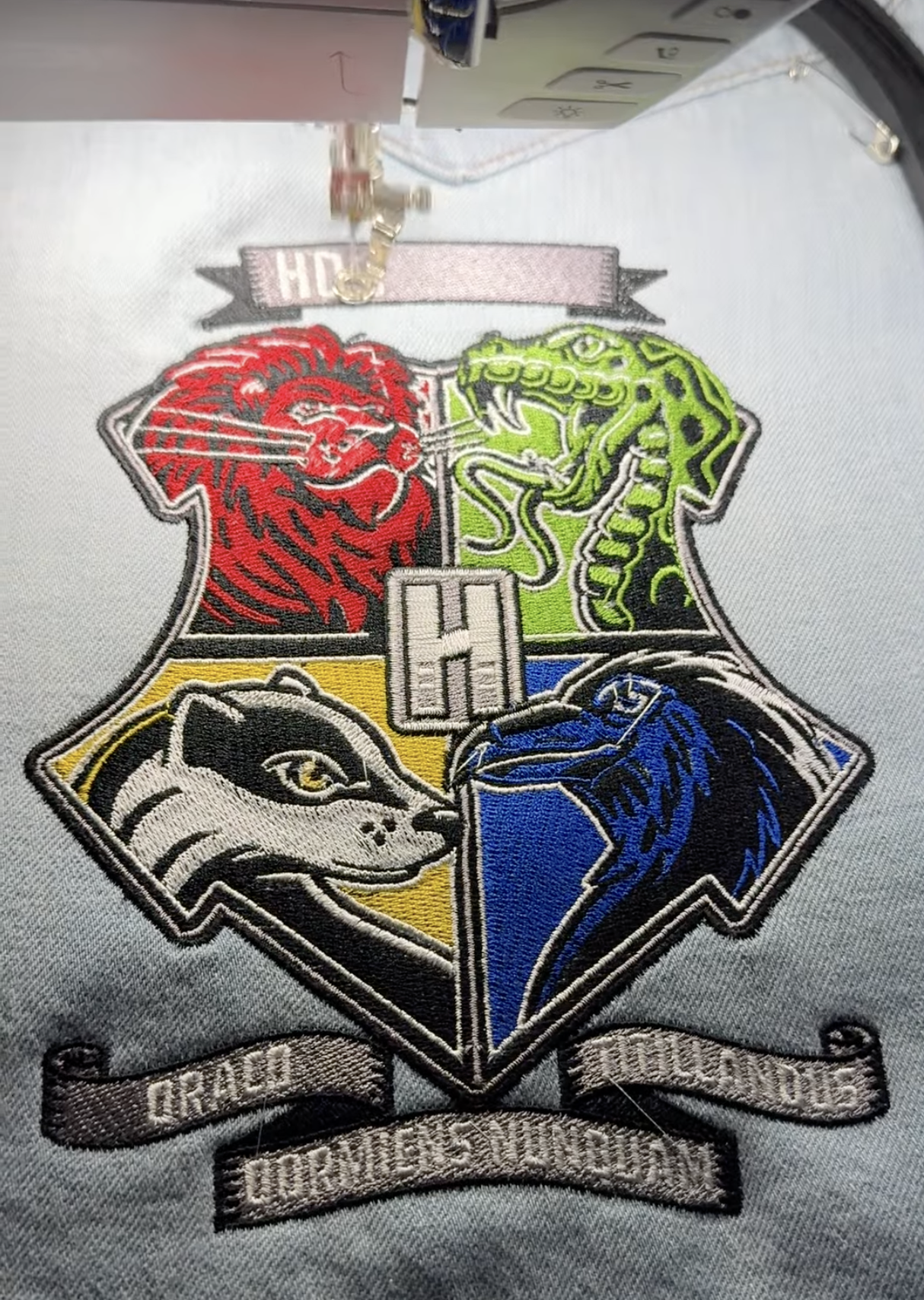
At the time, I treated stabilizer like a supporting detail. I focused on my fabric instead. I was embroidering on denim for the first time. It felt structured enough, so I paired it with a Medium Weight CutAway Stabilizer and moved on.
What I didn’t factor in was stitch density.
About halfway through, I started noticing the fabric pulling.
Then I noticed something else.
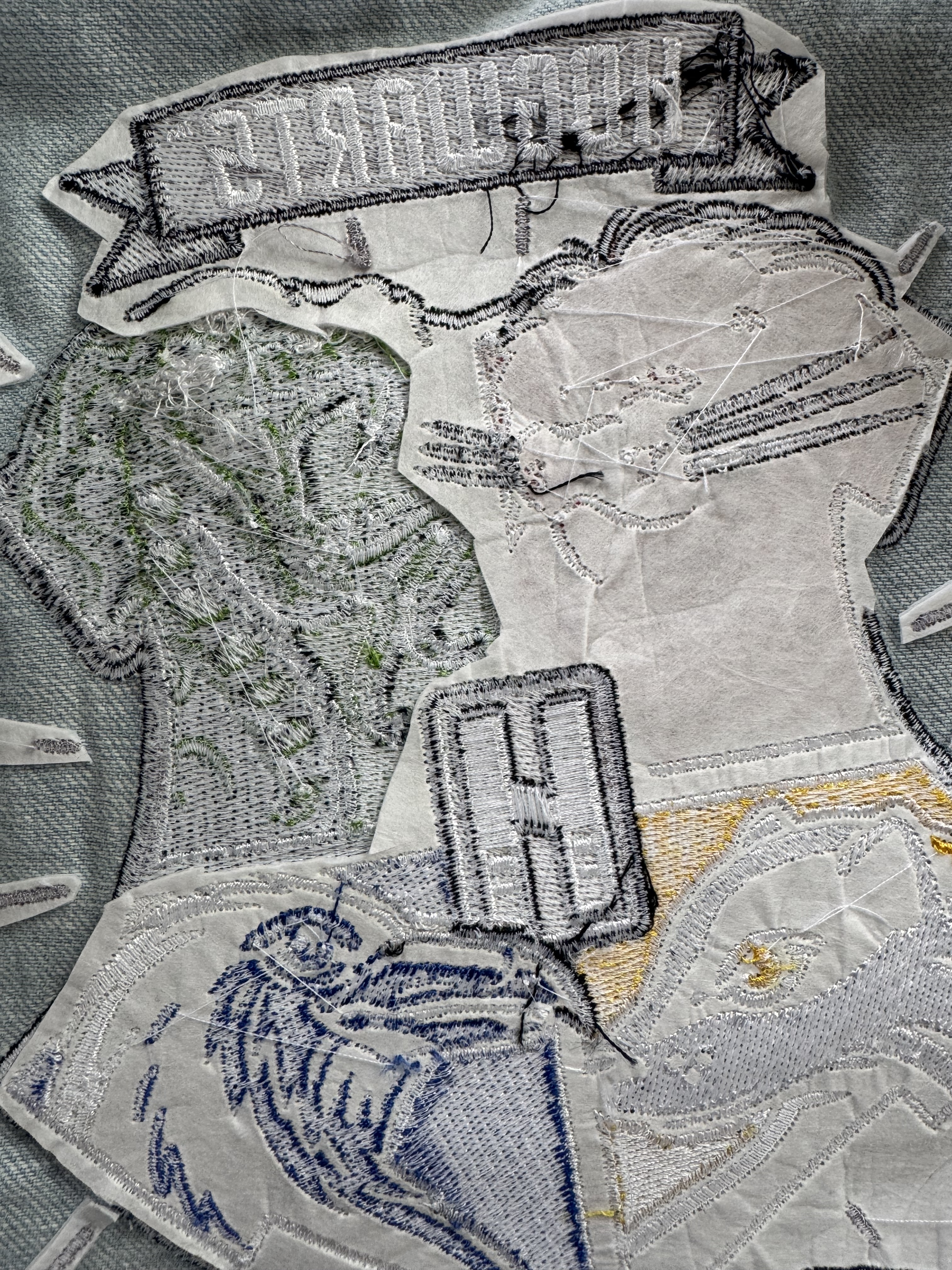
The stabilizer wasn’t holding. It had started to perforate, the needle had weakened it one pass at a time.
At that point, I was about 18,000 stitches into a 35,000 stitch design.
That’s when the problem became very real.
No Clean Way Out
I stopped the machine and walked away.
That’s something sewing has taught me well. When something isn’t working, forcing a fix rarely improves the outcome.
The problem was clear. I needed more stabilization. But re-hooping would throw off the alignment, and there was no clean reset. I stepped away and dreamt about the issue.
Not kidding, I do that a lot when I encounter sewing hurdles.
After actual dreams and mentally walking through potential solutions, I did what most sewists do. I improvised.
Not elegantly. Not by the book. Definitely a little MacGyver’ed.
I kept the project hooped and safety pinned an additional layer of Medium Weight CutAway Stabilizer to the back, making sure the pins sat outside the embroidery field and hoping I wasn’t about to make it worse.
It wasn’t a perfect solution. But it was enough to get through the rest of the design.
This Is Where It Clicked
In sewing, I can pivot mid-project. I can adjust, correct, and recover as I go.
Embroidery doesn’t reward that approach in the same way.
It’s less about reacting in the moment and more about setting yourself up correctly from the beginning.
Stabilizer isn’t a secondary decision. It’s foundational. Stitch density matters just as much as fabric choice. Hooping isn’t just a setup step. It directly impacts the final result.
Most of the control happens before you ever press start.
This Is the Part That Slows Me Down
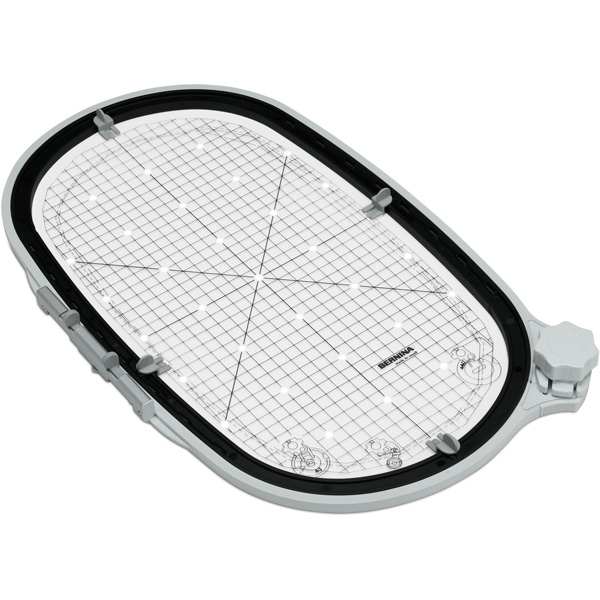
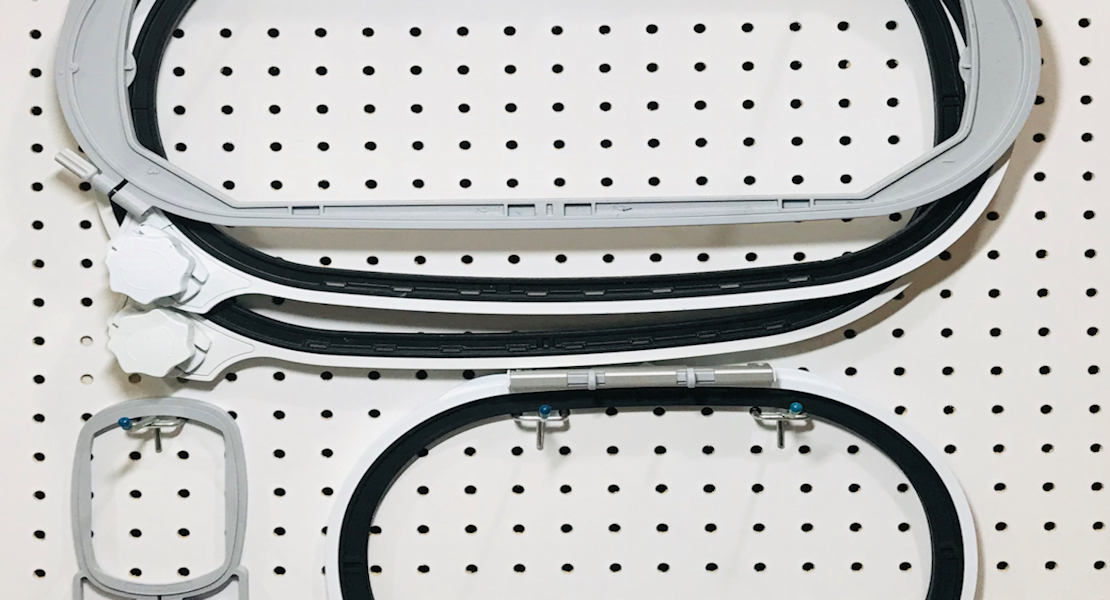
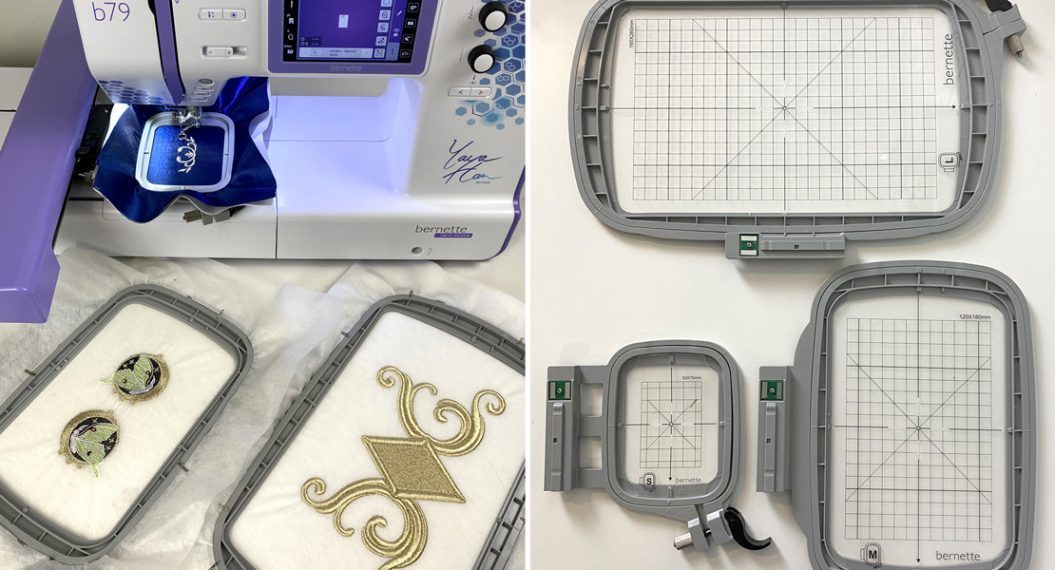
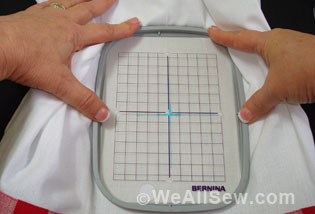
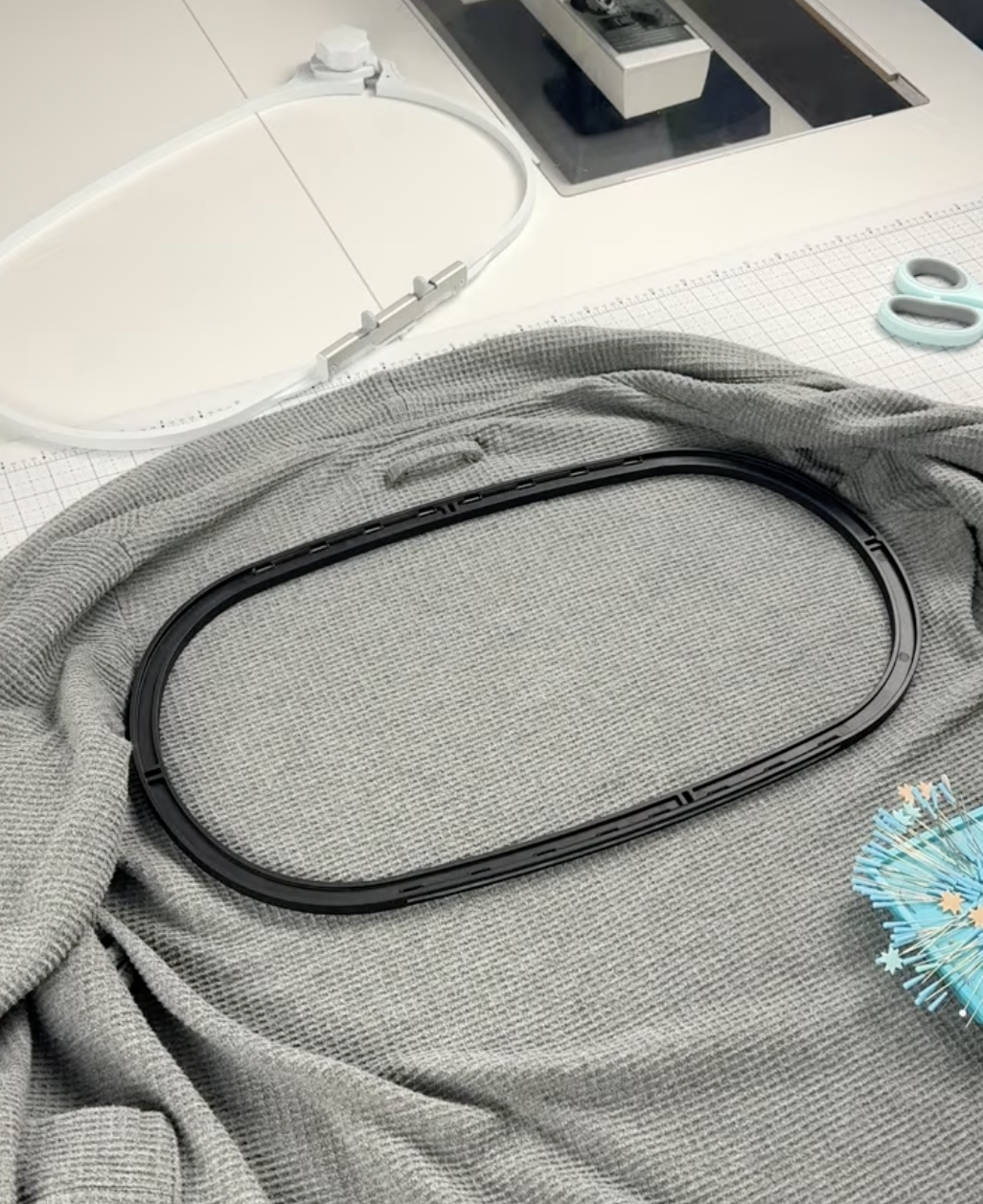
Hooping is still the part that slows me down the most.
Accurate placement. Even tension. Making sure nothing shifts. It sounds simple until you’re actually doing it.
There’s a level of precision here that feels higher stakes than I expected. If something is slightly off at this stage, you don’t always realize it until the machine is already stitching.
And by then, you’re committed.
Seeing The Pattern
The turning point wasn’t avoiding mistakes. It was understanding them.
Once I started paying attention to what went wrong, patterns became clear.
I stopped relying on instinct alone and started treating embroidery as a system. Not rigid, but structured.
And that’s what made it feel more creative.
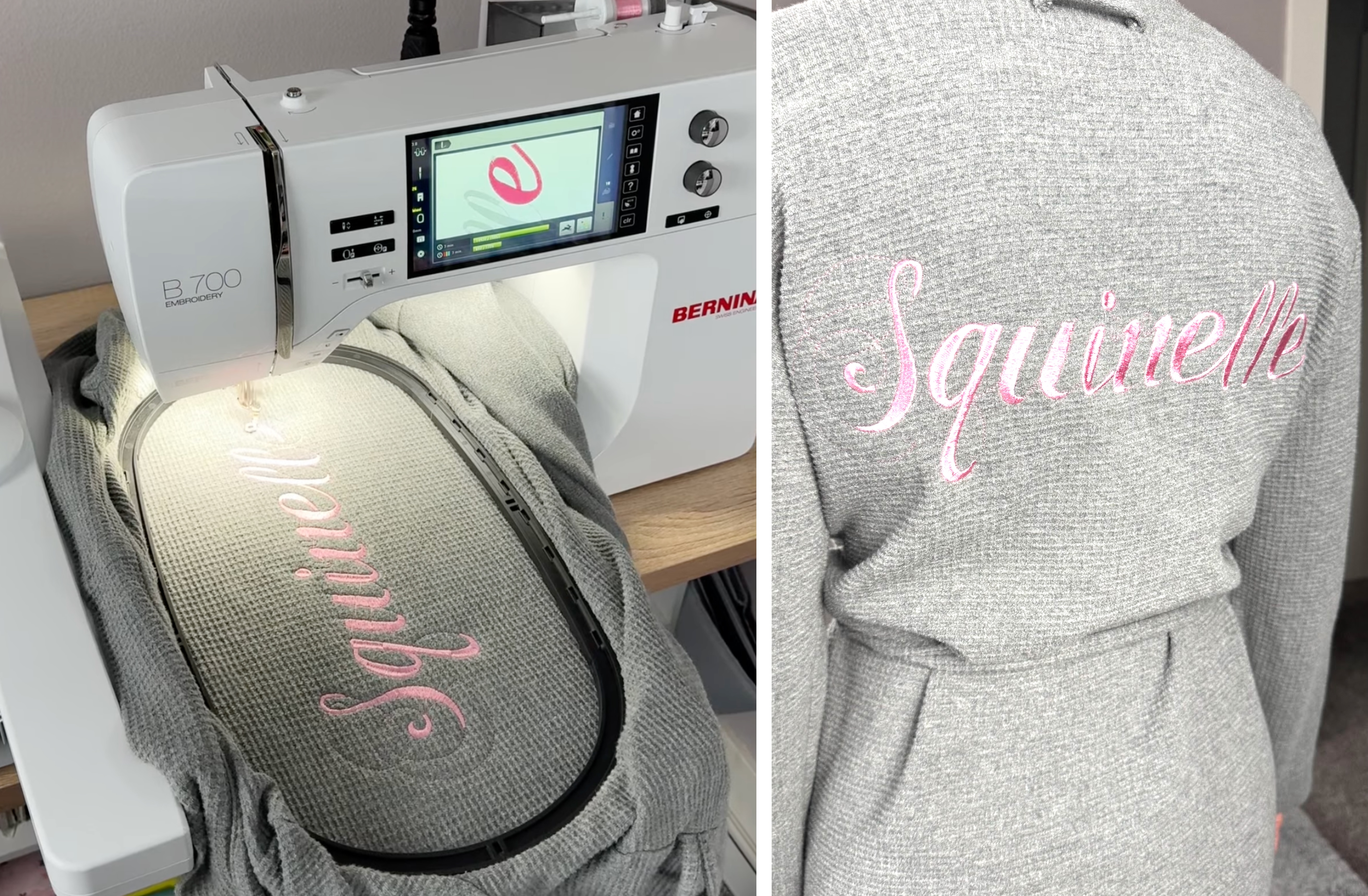
Because when the foundation is right, I’m not second-guessing every decision. I can focus on placement, design, and how I actually want to use embroidery in my work.
The learning didn’t come from getting it right.
It came from seeing exactly why it went wrong.
Looking Ahead
I’m still early in this process. There are still decisions I second-guess and variables I don’t fully understand.
But the hesitation I felt at the beginning has shifted.
Not because I’ve eliminated mistakes, but because I understand what’s at stake before I press start.
In the next post, I’ll be moving into how embroidery is starting to influence the way I think about design, texture, and surface pattern.
For now, I’m still pressing start, but with a much clearer understanding of what happens before I do.