8 Tips for Longarm Quilting Denim

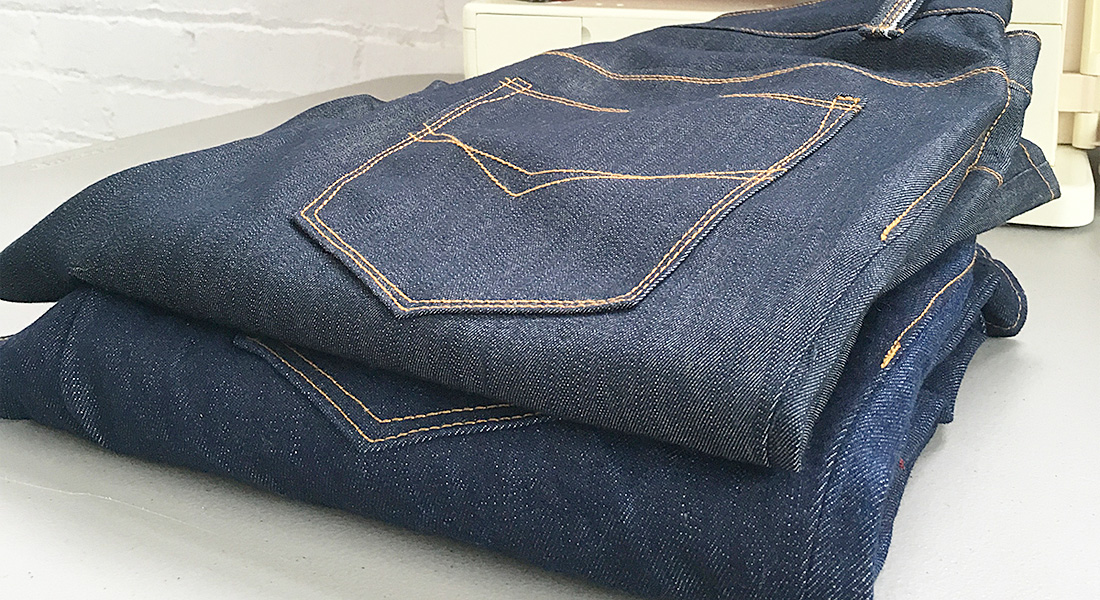
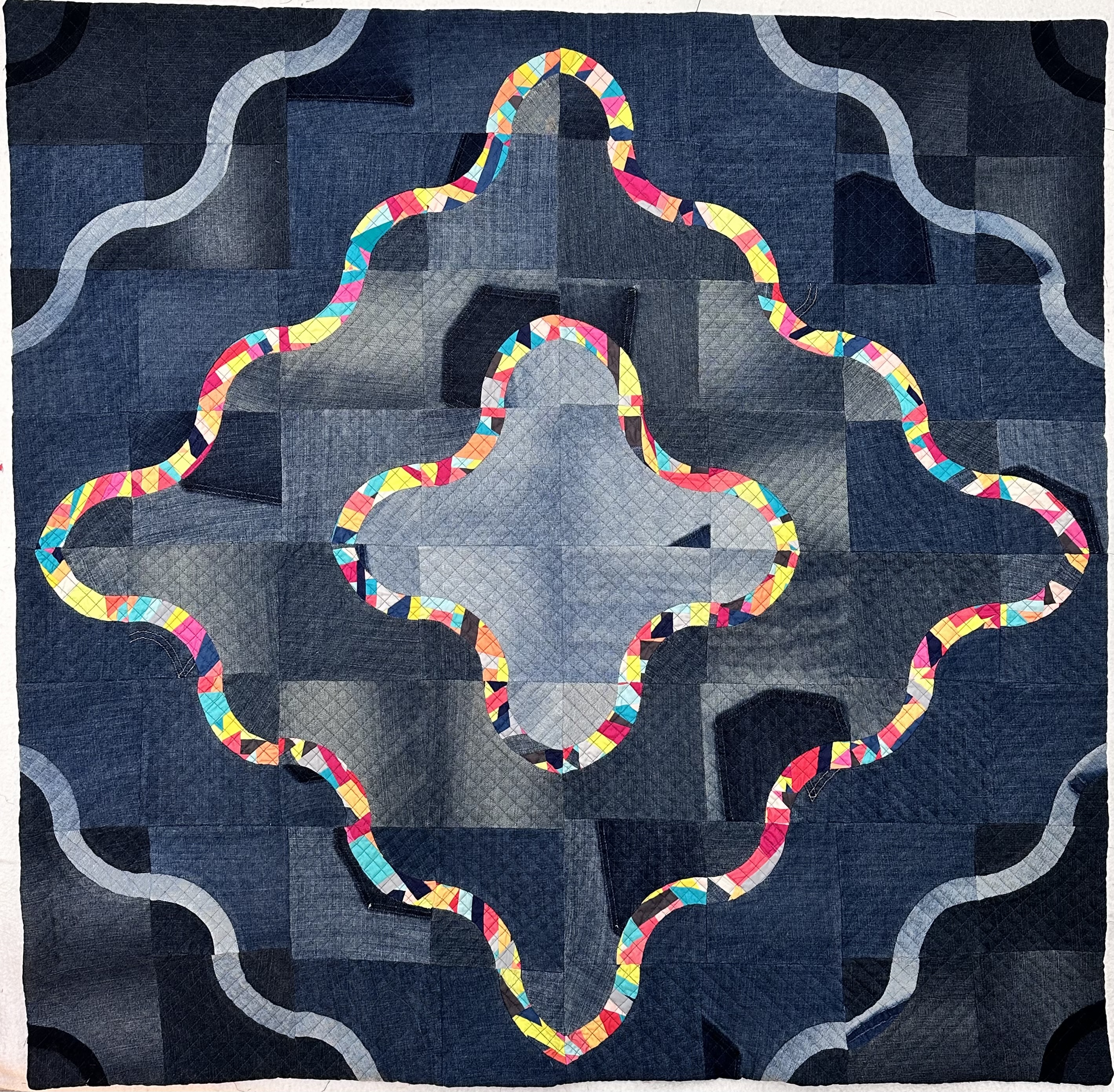
Longarm quilting a quilt made entirely or almost entirely of denim makes quilting a physically heavy quilt significantly easier, but it’s not without some practice to adjust to the different medium. The end result is well worth it to create a quilt using beautiful, sustainable materials. Here are eight tips to help make it easier to longarm quilt denim:
Materials
Tip 1: Needles
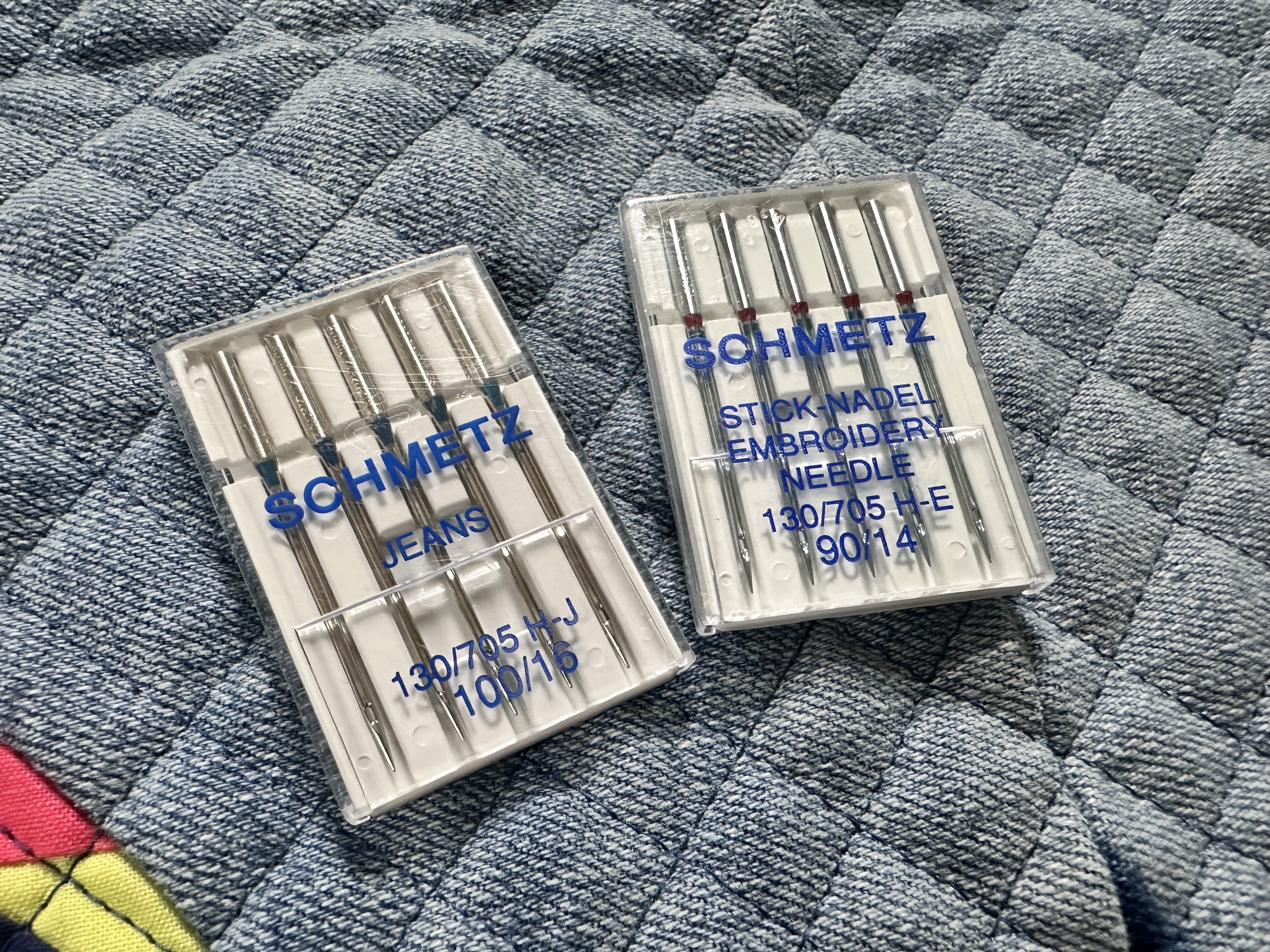
Use the right needle! And make sure you’re using a fresh, brand-new needle. What is the right needle to use? I’m a big fan of using embroidery needles because they have a fine tapered point, but denim needles are also great for quilting denim quilts. Personally, I use a 90/14 needle because I like having a slightly thicker needle to punch through such thick fabric, but an 80/12 or even a larger 100/16 needle would work too.
Tip 2: Batting & Backings
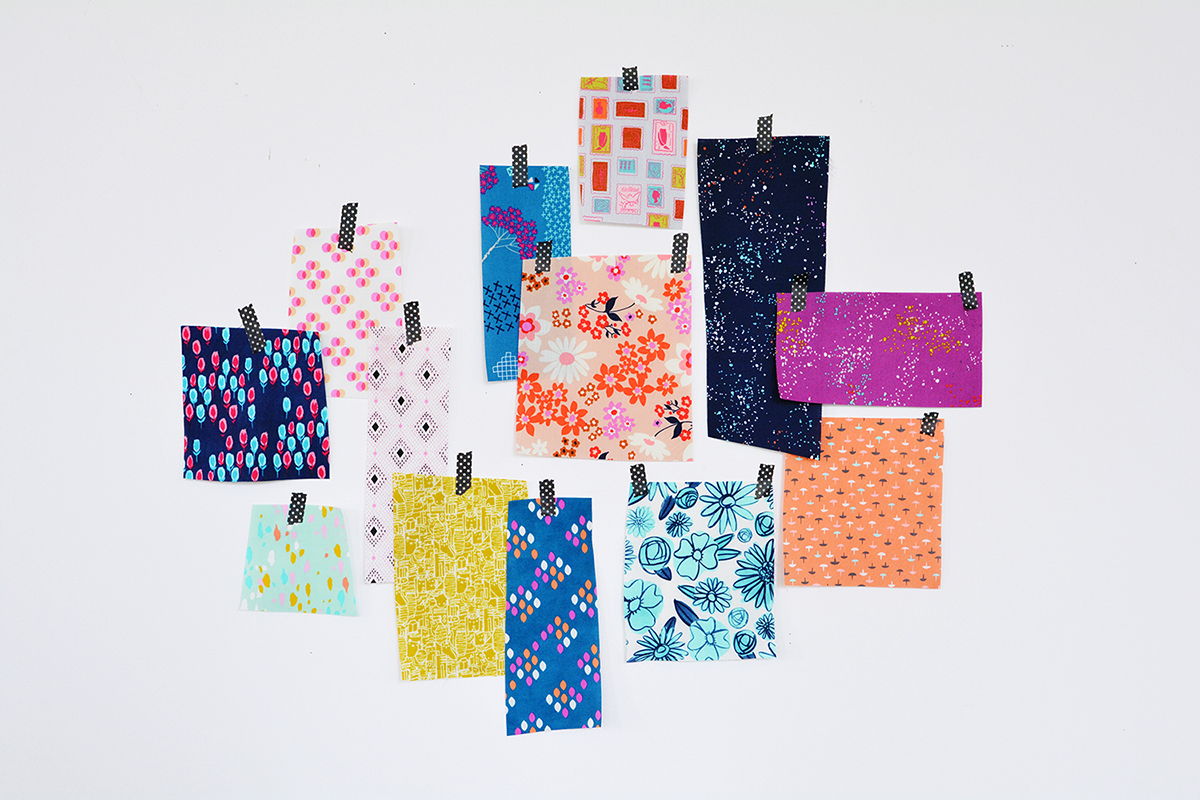
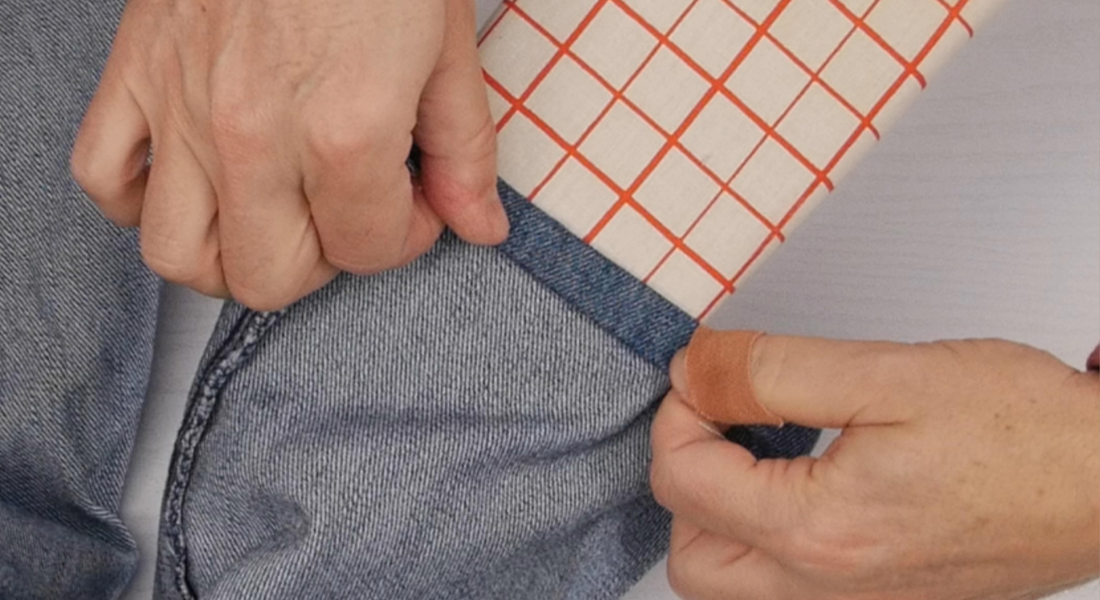
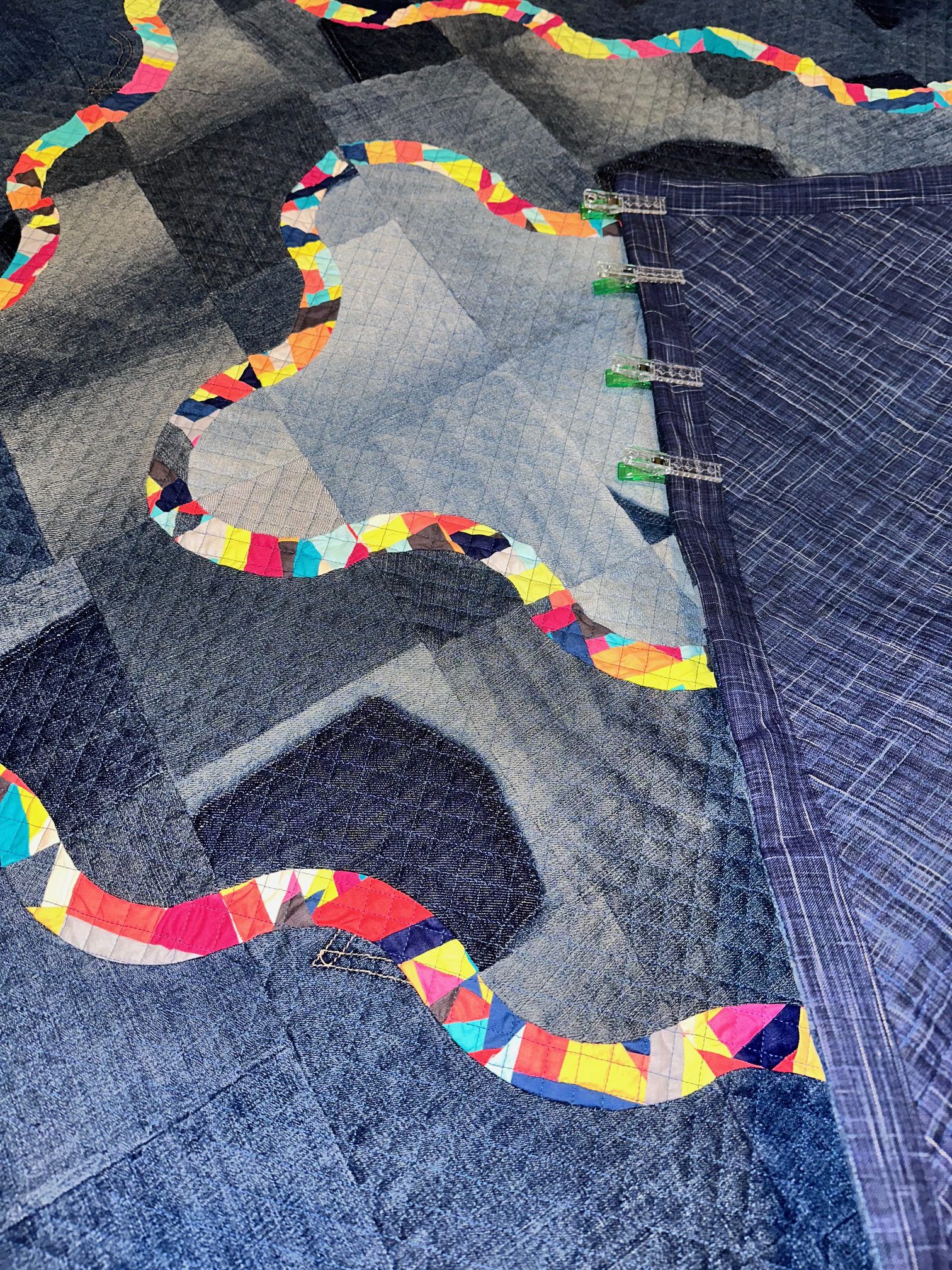
Because denim is so thick, I recommend using a thinner batting. My preferred batting is a thin bamboo blend, but a thin cotton or poly blend would work well. Thicker battings and even backings can make it more difficult to quilt through all of the layers of the quilt. And when it comes to backings, you might want to keep that on the thinner side as well to avoid too much bulk under the machine. Using more denim or flannel might make it more challenging to quilt. Using softer linen, cotton, voile, or lawn fabrics can help balance out the thickness of the denim quilt top. As you can see in the image below, where I’m finishing facing my quilts, I used a thin linen fabric for the backing of this denim quilt.
Tip 3: Thread
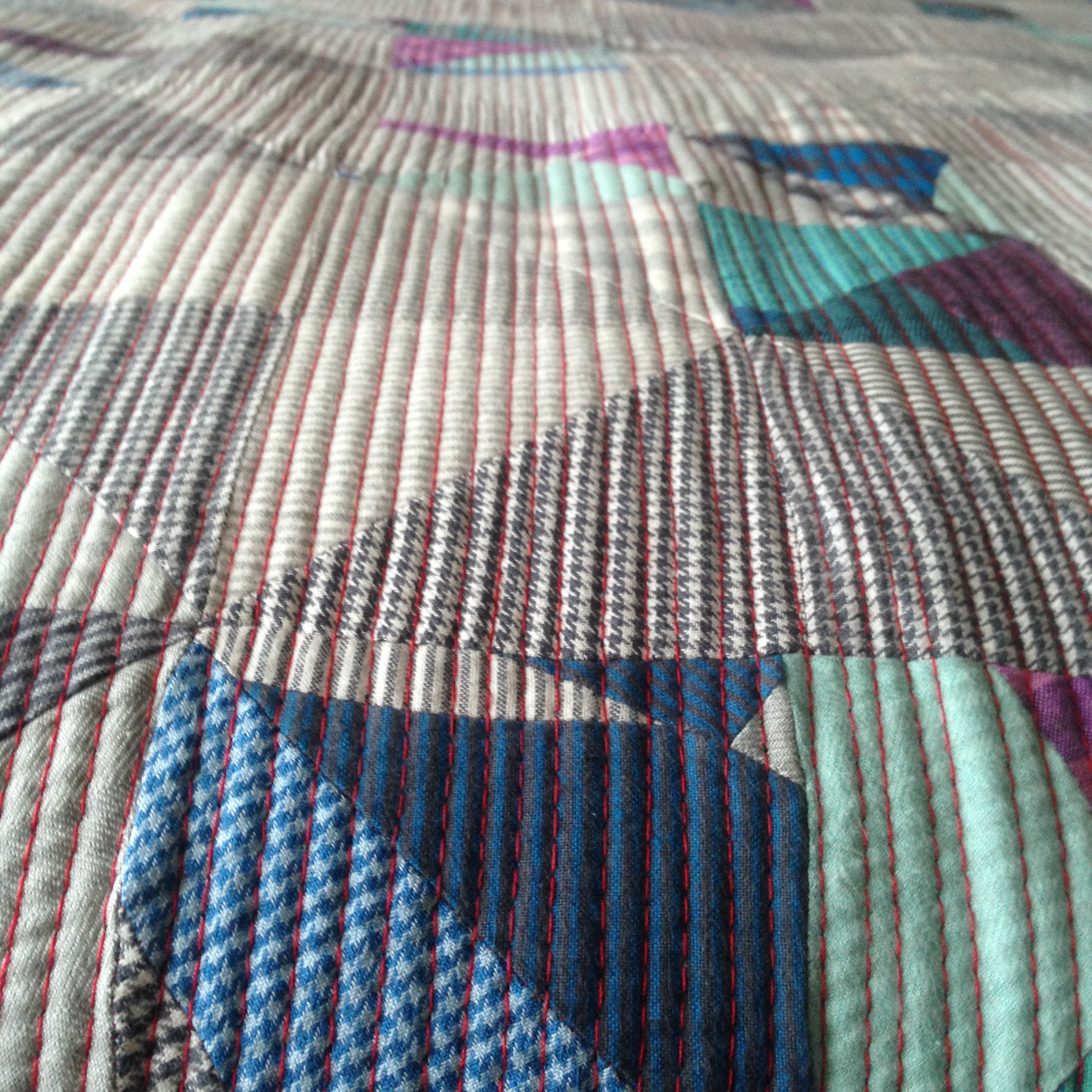
I prefer using a polyester thread for quilting denim as opposed to a 100% cotton thread. The polyester thread is able to withstand going through the dense denim, and because it often has a bit of a sheen to it, the thread stands out a bit more, even when using a 50wt or thinner thread. When using cotton thread, I’ve had a few instances of breakage, and it tends to melt into the denim and be difficult to see. Of course, if you want that blended look and feel, you might want to try cotton thread; just go slowly. In the sample quilt shown throughout this blog, a 50wt polyester was used, and you can really see the texture of the quilt, but the thread blends in beautifully.
Preparing Your Quilt
Tip 4: Basting
Denim tends to stretch, especially today’s denim, where many of us wear stretchy denim for comfort. To help combat all of this stretching, I recommend basting not only the edges of your quilt but about every 6”-8” of the quilt to avoid distorting the quilt as you go.
Tip 5: Quilting Foot
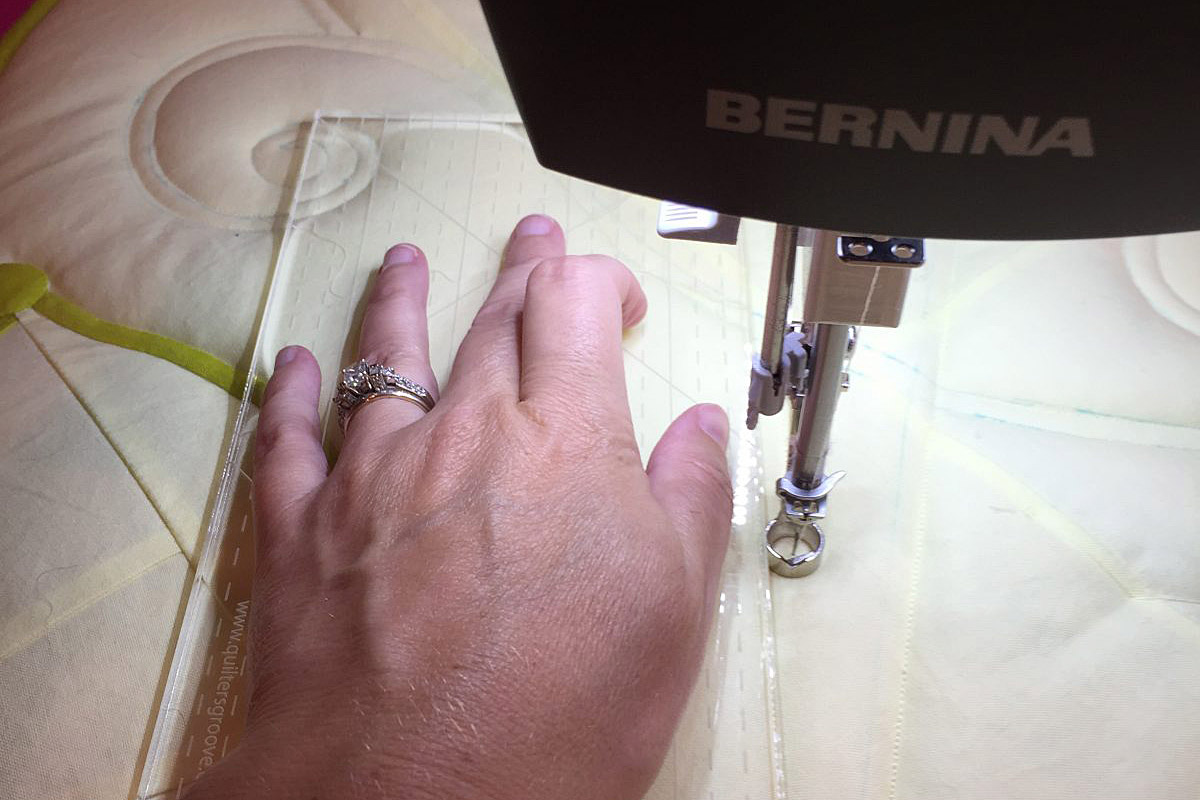
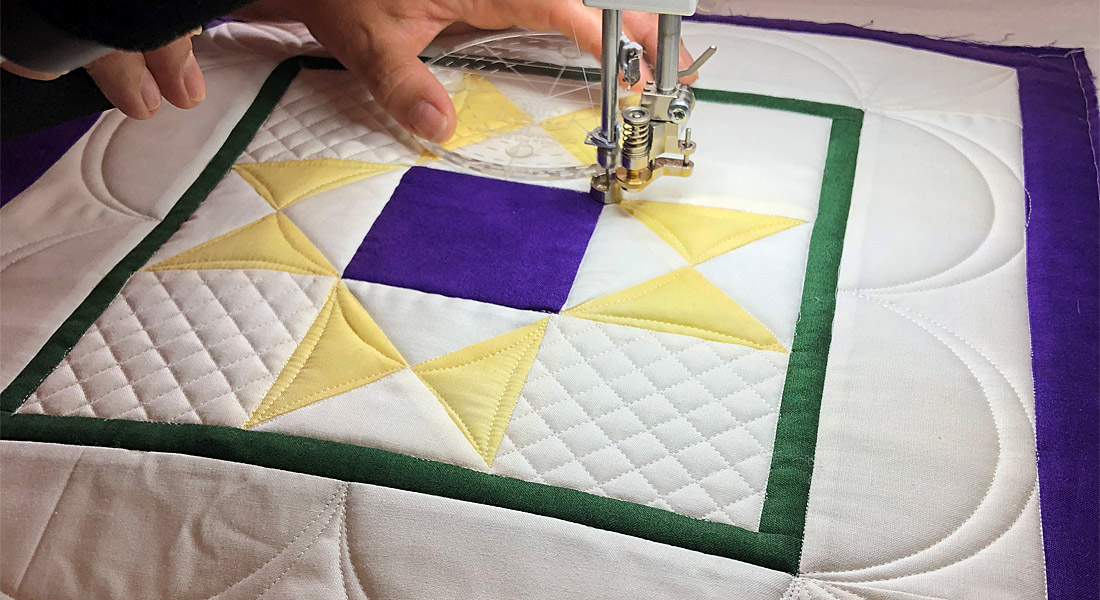
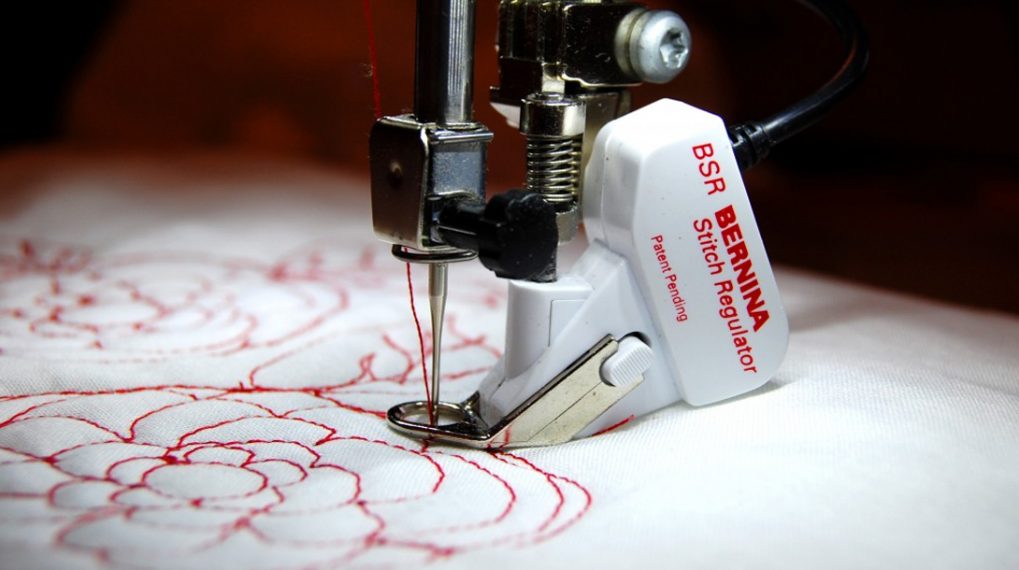
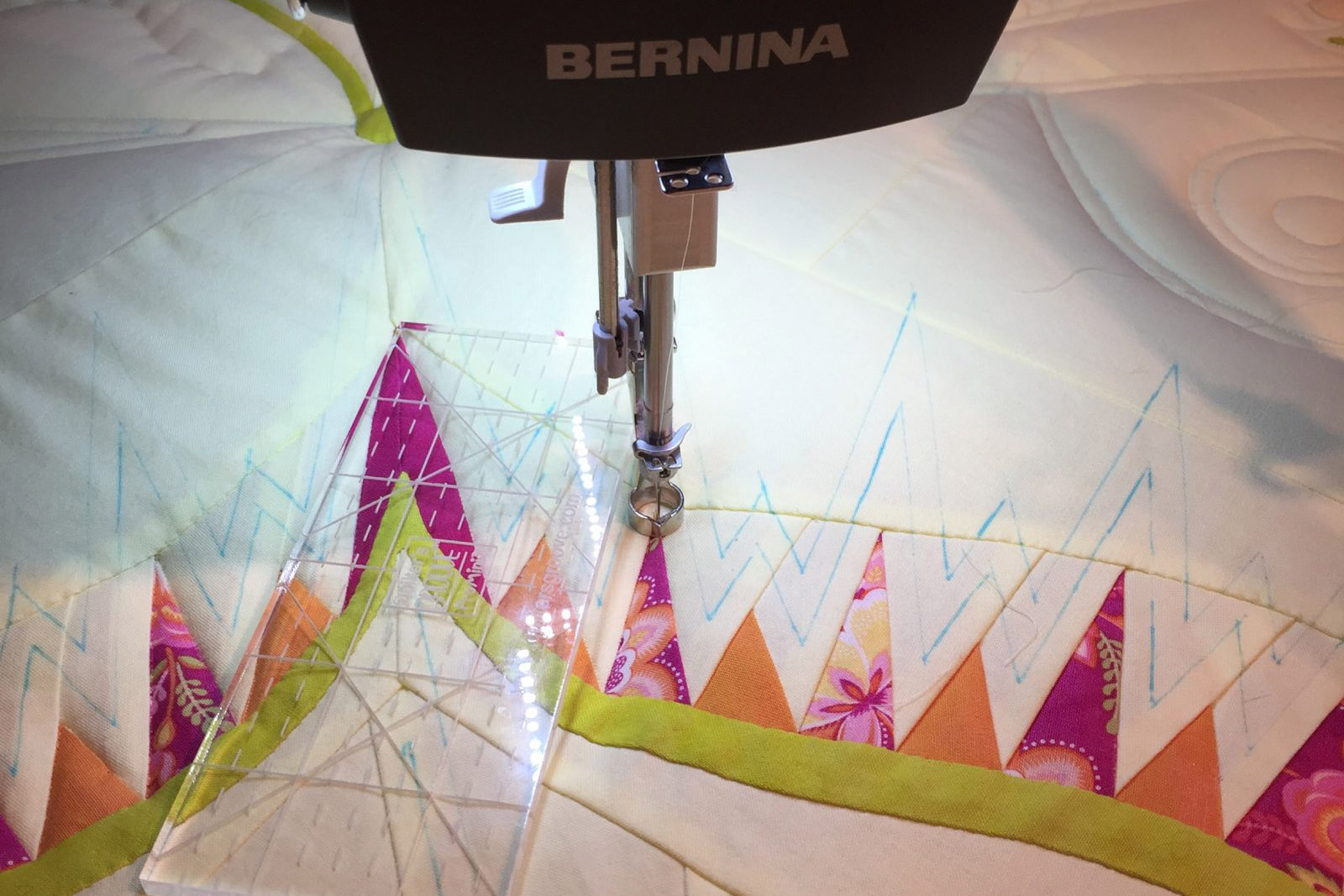
While I quilted my most recent quilt with a Ruler Foot #96 because I was using a ruler to measure the distance of my stitches, I highly recommend using the Adjustable Gliding Cup Foot #74 when quilting denim. This foot allows you to still have a clear view of the quilting area, but you can adjust the height according to the quilt loft and seams – key since the denim is pretty thick. The Adjustable Gliding Cup Foot also easily glides over the bulky seams that denim quilts often have.
Quilting Your Quilt
Tip 6: Quilting Density
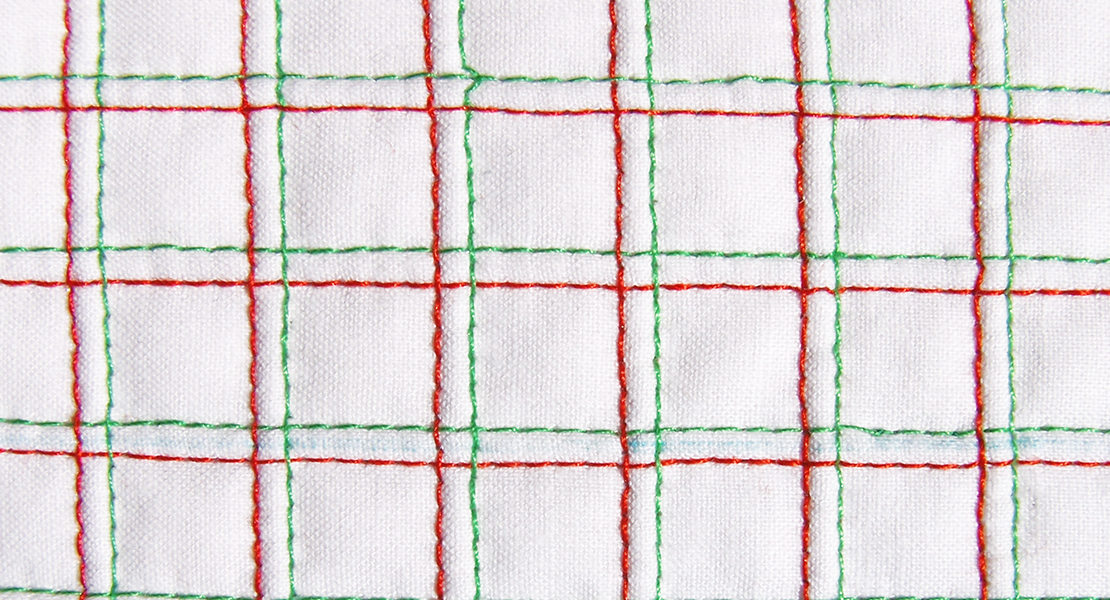
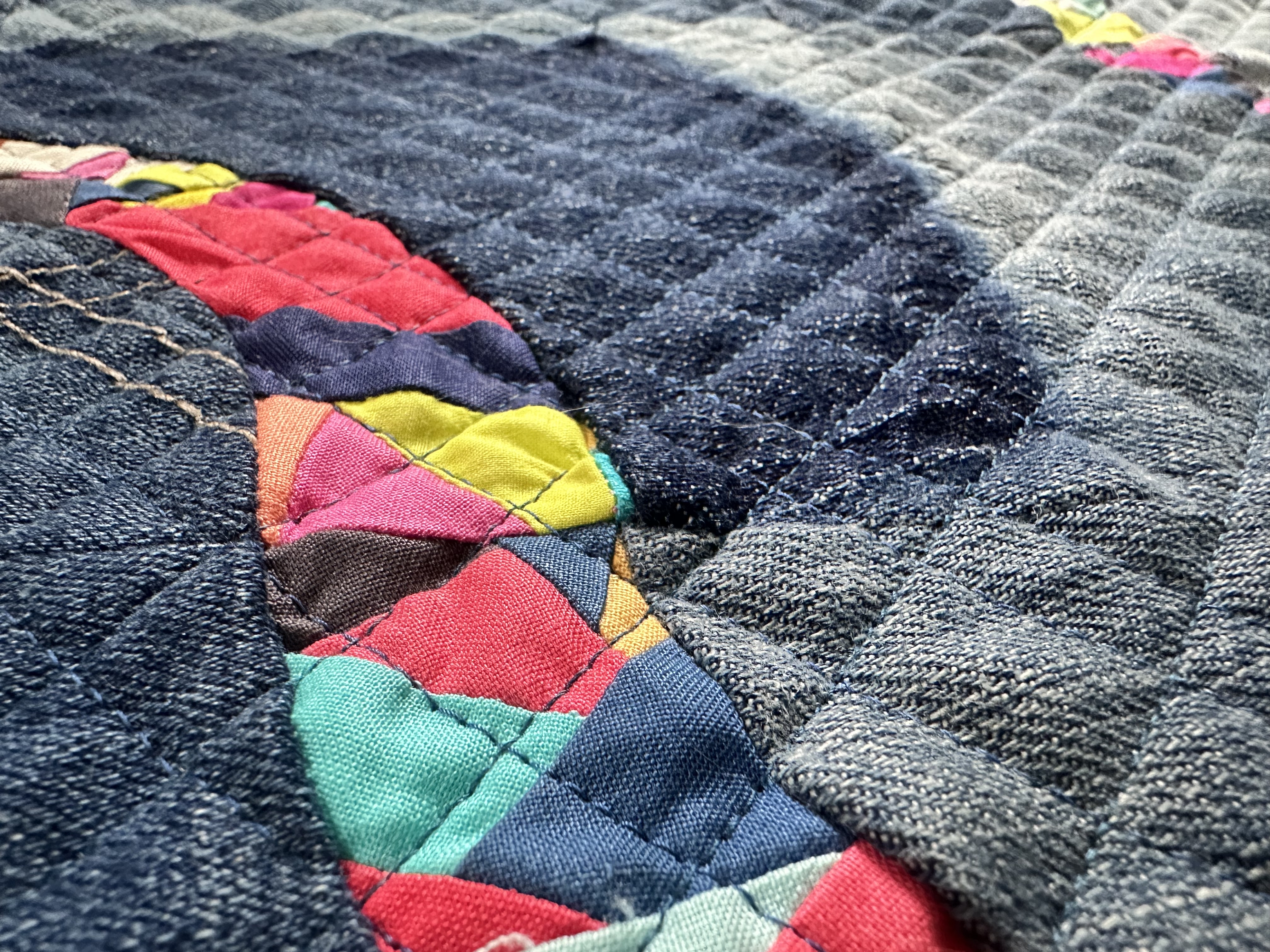
Quilting a dense design on a predominantly denim quilt top is going to make it extremely stiff, which could be exactly the look and feel you’re going for when making a beautiful art quilt to hang on the wall. If you want your quilt to still have a softer drape, I recommend quilting your quilt no smaller than ½” apart. In this sample quilt, I quilted it in a ½” grid and that’s about as tight as I would go with a denim quilt.
Tip 7: Avoid Bulky Seams
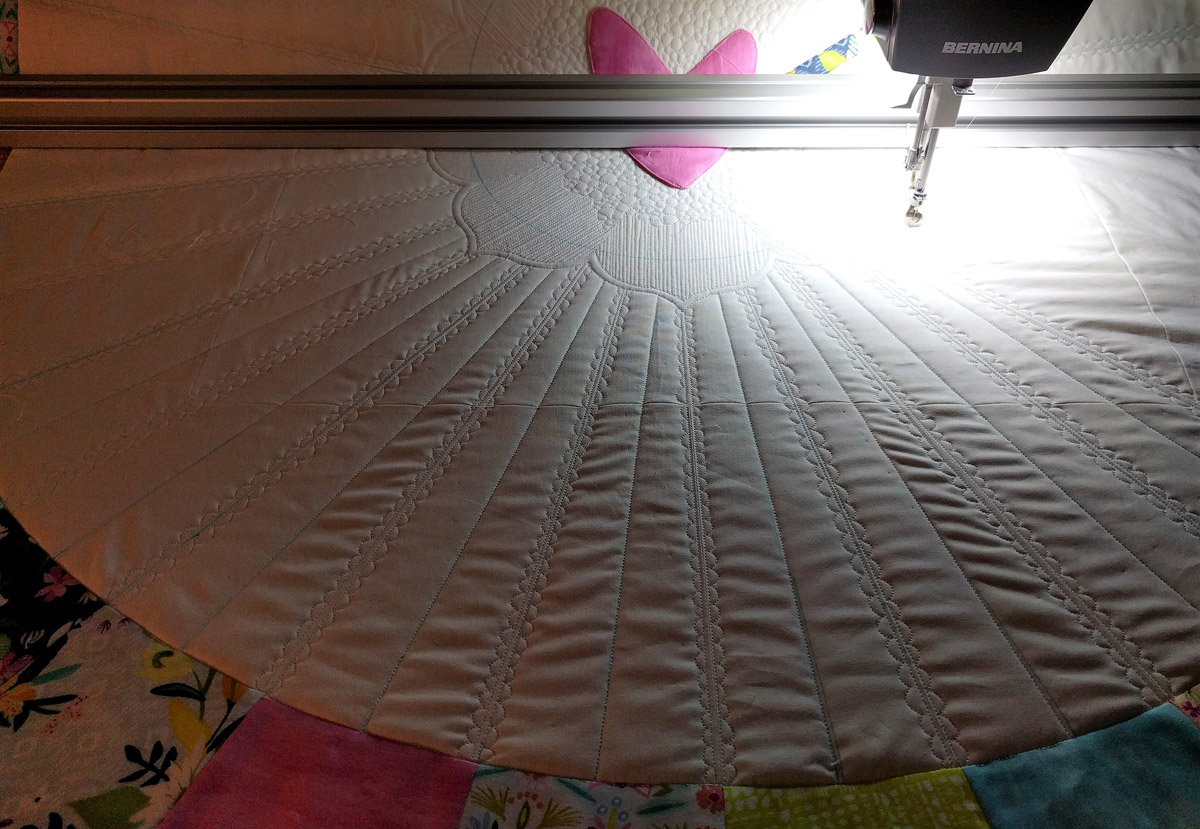
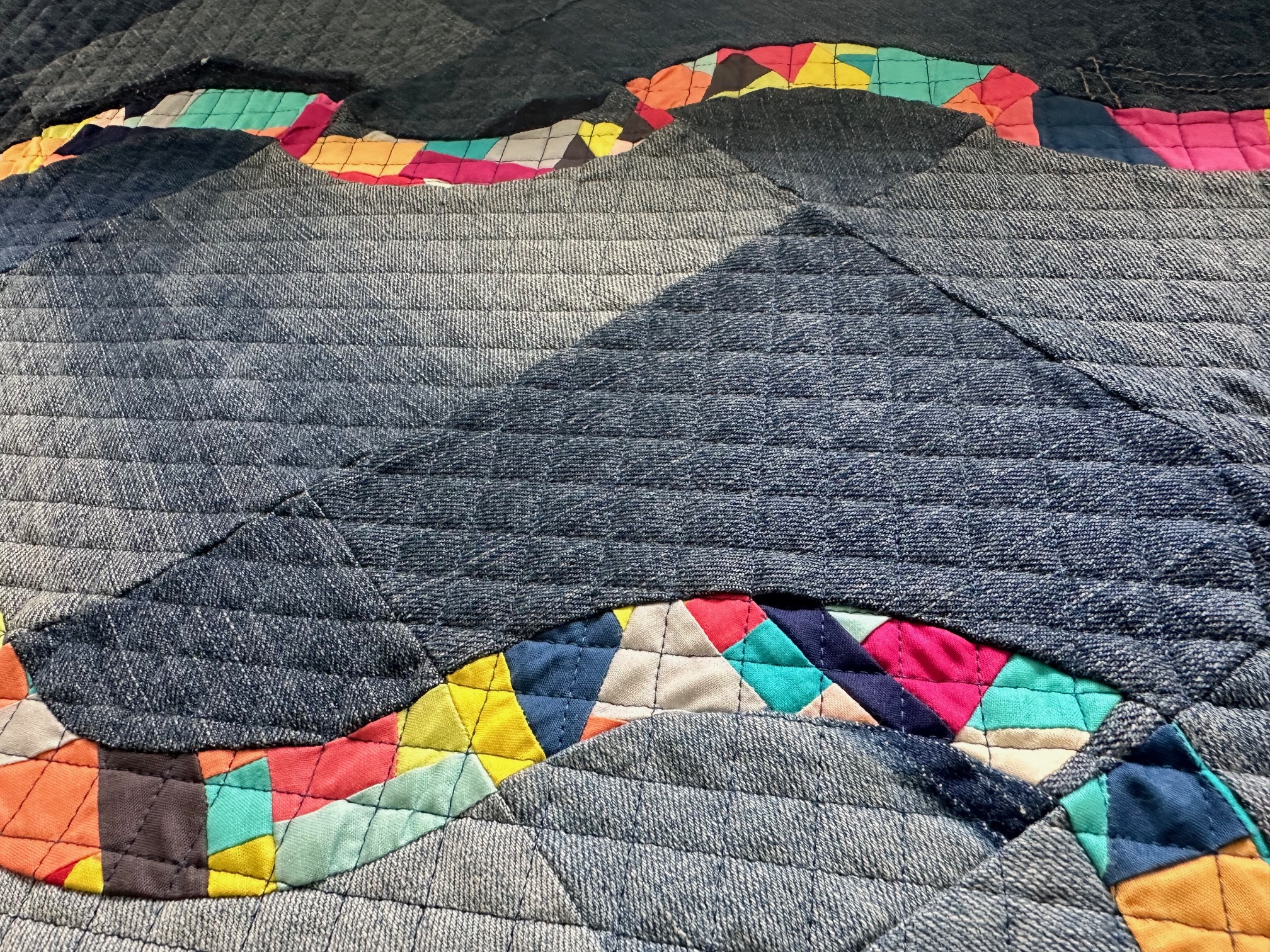
I know, easier said than done, but if you’re freemotion quilting your denim quilt, attempt to avoid quilting over the extremely bulky seams. While a good tip in general, sewing over areas with many denim intersections could result in skipped stitches, a distorted design, or even a broken needle for the thickest of seams. Before you start quilting, it is a good idea to identify which seams might be problematic before you get going, so that you can game plan in advance. It may not be possible to avoid every single bulky seam, but with enough planning, you might just be able to avoid a majority of them. You can see from the below picture where that tiny sliver of aqua is in the center that the seam there is extremely bulky. Given I was quilting an all-over design, sometimes these areas were unavoidable, but I was very glad I didn’t need to sew over that seam. If I were freemotion quilting and not doing an all-over design, I would have very intentionally avoided that area.
Tip 8: Quilting Speed
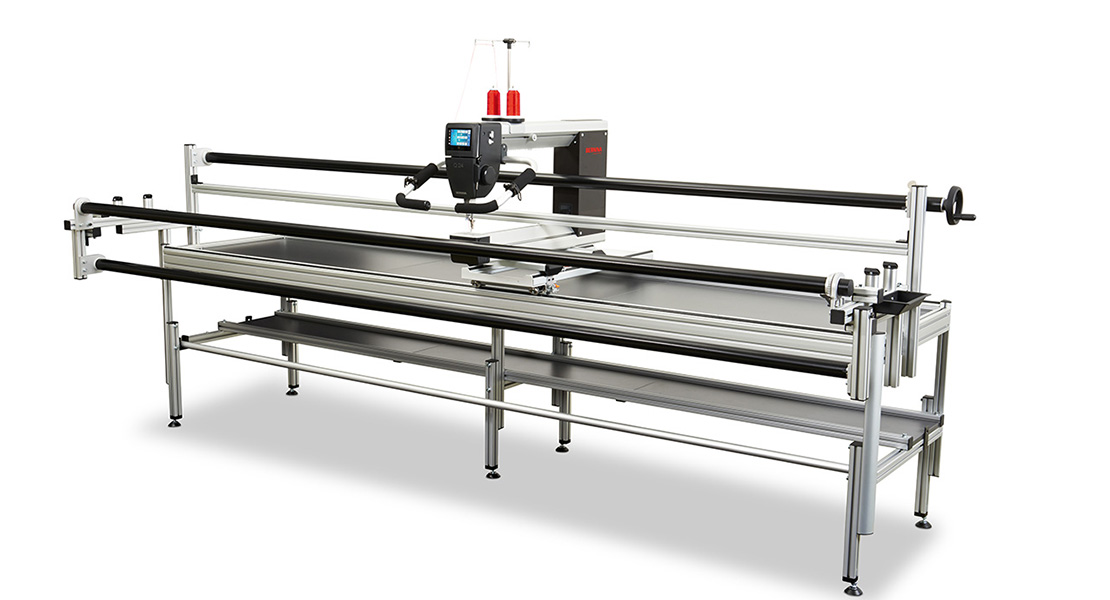
When quilting with denim, I like to slow down a bit with my speed. If I’m freemotion quilting, I’ll be mindful of my speed to not go too fast, and when I’m using the BERNINA Q-matic, I set my speed at no faster than about 50-60% to ensure the quilting is smooth and there aren’t skipped stitches or other issues. Sometimes slowing down is faster than going faster and having to fix issues later.
Have you quilted with denim before, and do you have any additional tips? I’d love to hear them.